


Language, Support, Perspective: How FH JOANNEUM Opened Its Doors to Ukrainians
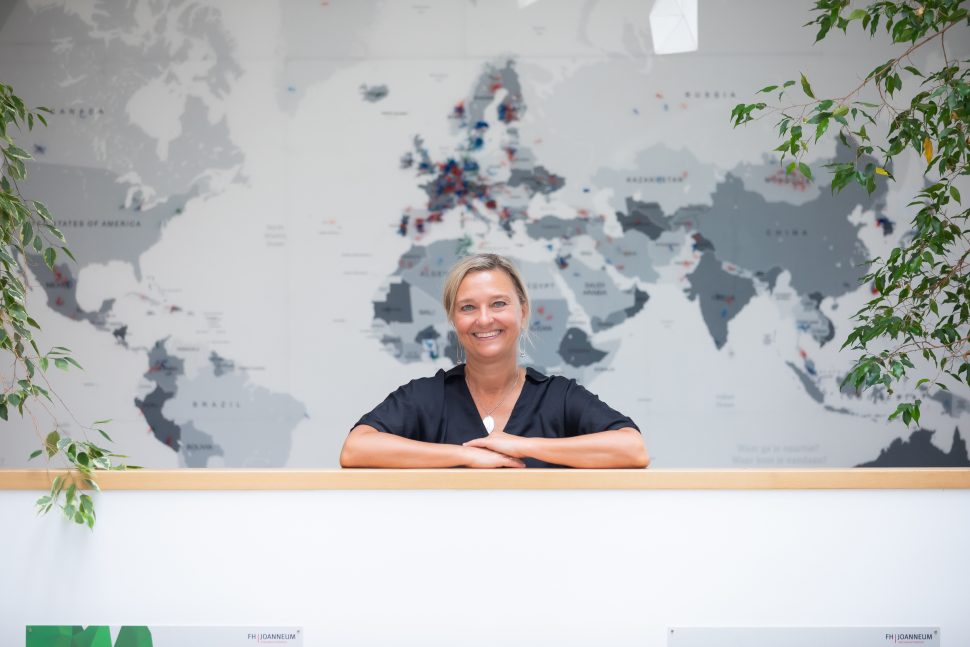
Birgit Hernády Photo: Thomas Raggam, Schubidu Quartet
With the onset of Russia’s full-scale invasion, thousands of Ukrainians were forced to seek not only safety but also new educational opportunities. FH JOANNEUM, one of Austria’s largest universities of applied sciences, quickly transformed its humanitarian response into sustainable educational programs. We spoke with Birgit Hernády, Head of International Relations, about the journey of support, the challenges, and the vision for the future.
“In those early days, we weren’t acting as an institution – we were simply acting as people. We just knew: we had to do something. We started collecting humanitarian aid, clothes, medicine for Ukrainians. But we also realised that the most valuable thing we could offer was our expertise. We have over 20 years of experience organising German language courses – that’s where we could be truly helpful. So, we got to work, drawing on lessons from 2015, when we first offered similar courses for refugees from Syria and Afghanistan,” – Birgit Hernády recalls.
Education as a Lifeline: Over 1,000 Ukrainians Joined Language Courses Within a Year
The first German course began just two weeks after the full-scale invasion – and to everyone’s surprise, it attracted a large number of participants in a very short time. Entire families came to the university: parents with schoolchildren, young mothers, elderly people.
The team focused on an informal and inclusive approach – no official documents or registration were required. The goal was immediate, accessible support, with the hope that formal assistance would follow. Fortunately, they had some financial resources left over from previous refugee support projects.
“It wasn’t just about learning. It became a space of safety and human connection. Many participants arrived confused and distressed. We had to come up with new solutions, because it was impossible to integrate a thousand people into our regular university curriculum — this was a very different situation.
I remember the date clearly – March 10 was our first session. From then on, every week brought new courses and new people. The flow never stopped. We were in constant organisational motion, barely finding time to reflect – just doing.
I was especially moved by the older Ukrainian women – some in their 80s – who didn’t speak German or English. So, the courses we offered for them weren’t like
typical university classes. We created a space where they could, for a moment, forget what was happening. Where they could drink coffee, talk to others, learn how to live here, how to shop at the local store. It was a safe space – with learning, but without pressure.
Many of those people have since moved from Graz to small towns and villages, where integration into the local community became key. Today, we no longer run those specialised courses,” – says Ms. Hernády.
FH JOANNEUM provided everything necessary — from teachers (many of whom were Slavic studies students) to textbooks, official certificates, and even psychological support. The language courses ranged from basic skills to ÖSD exam preparation. In parallel, the university adapted its admission procedures, allowing Ukrainian students to continue their education or validate their qualifications in Austria.
Who Became a Student at FH JOANNEUM?
We asked how many Ukrainians have joined university life so far and which fields of study interested them most.
“Ukrainian students are enrolled in a variety of programs – from IT and technical disciplines to design and media. What impresses me the most is their motivation. They not only overcome the language barrier but often come with a very strong academic background.
Back in 2015, we had introduced a simple and accessible application process for applicants with a refugee background, which could also be used immediately for Ukrainians. If they brought the necessary documents — great; if not, we also accepted copies or unofficial versions. For cases where documents were completely missing, we had a system to recognise previous education through interviews and tests. The programs heads would assess the students’ knowledge levels through interview or written assessments, and give them the opportunity to study”, explains Ms. Hernády.
– Were there difficulties with Ukrainian students adapting to the Austrian education system?
“The main difference was in the school system itself: in Ukraine, secondary education lasts 11 years, whereas in Austria it is 12. So, some students had to take additional exams to compensate for this one year. But these were not always exams in math or physics – we know that Ukrainian education is very strong in those areas. Frequently, these were tests in German or English”.
– How has your support for Ukrainians changed over time?
“About a year and a half after the full-scale war began, we completed the special language programs for Ukrainians and integrated them into regular courses. We didn’t want to emphasise their refugee status – they are students just like everyone else.
Another important point: Ukrainian students enrolling in bachelor’s or master’s programs are exempt from tuition fees – just like other students with refugee status. This was a principled decision by the university leadership. In contrast, the standard tuition fee for third-country students is about 1,500 euros per year,” says Birgit Hernády.
Some students completed certificate programs focused on academic skills, German language for technical fields (STEM), and adaptation to the Austrian education system.
Ukrainian students also have the opportunity to take part in intensive German language courses offered through the European Erasmus+ programme. This July, the two-week courses brought together Ukrainian academics and young people from various universities, allowing them not only to improve their language skills and gain a deeper insight into Austrian culture, but also to briefly escape the harsh realities of war.
– How many Ukrainian students are currently studying at FH JOANNEUM?
“Before 2022, we had almost no Ukrainian students. Now, around 30 Ukrainians are enrolled, and 10 more have been admitted for the upcoming academic year starting in September. So overall, we will have about 40 students from Ukraine. Most of them completed our German language courses before enrolment.
We did not create a separate program specifically for Ukrainians. Instead, we offered a preparatory German language course – which forms the foundation for university studies. Most programs require at least B2 level, and some even require C1. So, students start at A2 level, study for a year, and finish with a certified B2 level (ÖSD exam).
But that is not enough – knowing the language on a general level does not yet mean being ready for university demands. That’s why we also run academic skills classes: how to read scientific texts, write papers, and give presentations in German. This helps students not just “learn the language” but become full participants in the academic process”.
Support as Part of the Mission: What Comes Next?
– Do you plan to continue or expand support for Ukrainian students in the coming years?
“Absolutely. We are very interested in Ukrainian students because, as experience has shown, they are incredibly motivated and academically strong. In general, we value international students – we believe that without an international environment, a university is not complete. But working with Ukrainians is especially easy for us. We share a common European cultural foundation, similar values, and even somewhat related languages.
Most Ukrainians have a good command of English and learn German quickly. Importantly, they are extremely capable. For example, our engineering and IT
programs are very demanding, but Ukrainian students handle it exceptionally well. Even despite the stress and anxiety for their loved ones still in danger, they put in tremendous effort and achieve impressive results. This is what moves us the most. So, we definitely plan to continue supporting them,” says Ms. Hernády.
It’s not just about adaptation but enrichment: the university is already noticing the positive impact of Ukrainian students on the international atmosphere.
A Message to Ukrainians
At the end of our conversation, we asked Ms. Hernády to share a message for those considering studying in Europe:
“The most important thing is, undoubtedly, the language. Even if you are a student studying in English, to truly understand the country, its culture, and mentality, you need to know German. It makes communication and daily life easier and, equally important, helps avoid misunderstandings that often arise when both parties speak a non-native language.
I would really like Austrians to learn more foreign languages – including Ukrainian. But a common platform can first and foremost be found through German. That’s why I truly recommend learning the language at least at a basic level.
Even if someone decides to return to Ukraine, knowledge of German will remain useful. It will always be a bridge between Ukraine and Austria. And when Ukraine becomes part of the EU, every new language will just be an additional advantage.”
Text by Olha Volynska