


How Ukrainian Artists Can Obtain Official Status in Austria
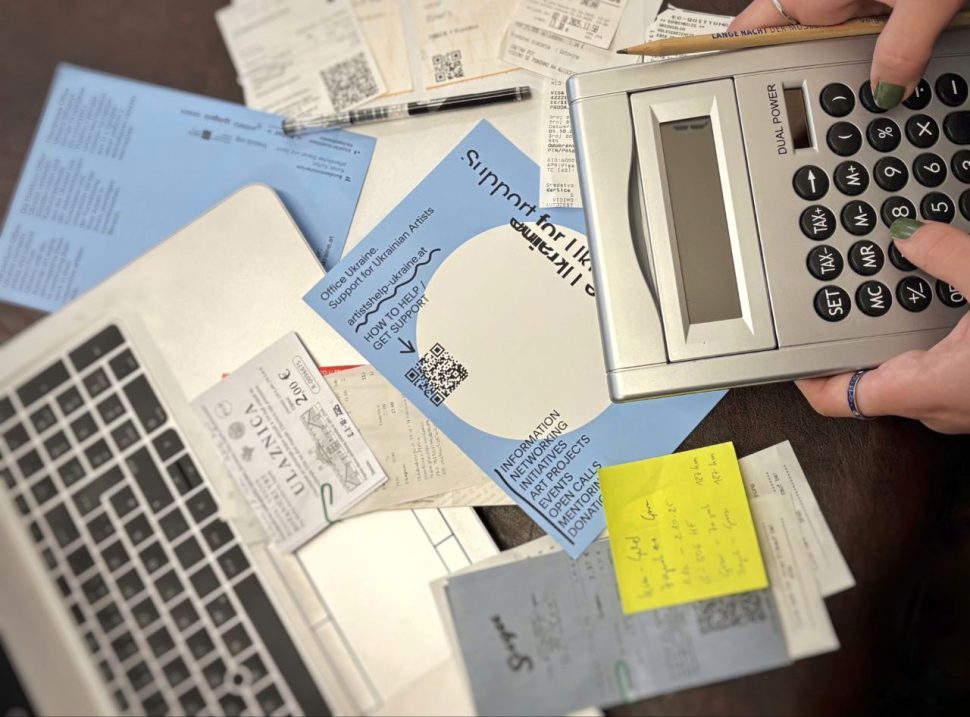
As I was preparing for an interview, I often caught myself wondering: do Ukrainian artists in Austria have any additional chances of obtaining a legal status? One would think that books, exhibitions, and international awards should open the right doors. Yet, I quickly discovered a sobering truth: for those who arrived after 2022, the rules are the same for everyone. Artists are no exception.
What unites us is the fact that we came to Austria seeking refuge from the war, and in most cases, we did not have enough resources to survive without social support. Yet, that support will not last forever, and the EU has already set the end date for temporary protection for Ukrainians in Europe — March 4, 2027.
This means that there is not much time left to search for long-term solutions. The next year will be crucial: the EU will develop “soft transition” rules to other forms of status. It will be easier for those who already have a job, study, or run a business. Vulnerable groups will be granted exceptions. For others, the choice will be clear: either legalise their status or voluntarily return home.
Experts advise not to wait until the last moment. The process of legalisation may be complex, but it is entirely possible. So what options do artists have in Austria, and what requirements do they need to meet?
Where should artists begin?
After 2022, the rules in Austria changed. Previously, artists could apply for a special residence permit for cultural workers (Niederlassungsbewilligung – Künstler). Now, however, for Ukrainians who received temporary protection and the so-called “Blue Card,” there is only one path — the Red-White-Red Card Plus (RWR+).
In practice, there are two choices:
– remain under temporary protection until it expires, or
– switch to RWR+, while still retaining the validity of the Blue Card even after receiving the new status.
What requirements does Austria set?
The rules are quite clear and the same for all professions. First, you must have full insurance coverage for at least 12 months — meaning you are part of Austria’s social insurance system, including health, pension, and accident insurance.
The second requirement is sufficient income, proving your financial independence.
Two possible paths for artists
For artists, there are two main routes: self-employment or employment.
As a self-employed artist (Selbständige Künstler), whether as a writer, painter, musician, designer, photographer, or sculptor, you officially register your business activity and pay contributions to the social system.
Alternatively, you may work under an employment contract. Even several short-term contracts can count, as long as together they provide the required income and insurance coverage.
Are breaks in work allowed?
Yes. For employed artists, the key rule is that within 24 months before applying, you must have at least 12 months of work experience. This can be continuous or accumulated through several contracts. For example, three months of work, a break, then another three months — all of this counts as long as it adds up to a full year of insured employment.
For the self-employed, the reference point is the date of business registration and tax number. Authorities focus less on accumulated work time and more on stability. The three months before submitting your application are crucial, as you must demonstrate compliance with all requirements during this period.
Does international activity count?
Exhibitions, book fairs, festivals, awards, grants, or scholarships can indeed be helpful — mostly as additional evidence of your artistic practice. If officials have doubts, they may request such proof. In that case, international recognition can strengthen your case, but it does not replace the core requirements: income and insurance. In this regard, artists are treated like any other Blue Card holders.
What is the minimum income?
Income requirements depend on family composition and are regularly updated at the federal level. Currently, the thresholds are:
– For a single person: €1,273.99 per month
– For a couple: €2,009.85 per month
– An additional €196.57 for each child
There is also a deductible allowance of €359.72 that can be subtracted from mandatory expenses, such as rent or loan payments. If your net income still exceeds the threshold after these deductions, you are considered financially independent and eligible for RWR+.
What documents prove income?
For self-employed artists, the easiest proof is invoices issued to clients and paid in full. If you work with cash, you must maintain a cash book. Once annual income exceeds €7,500, Austrian law requires a cash register.
Income from abroad, including Ukraine, is also considered valid, as long as it is documented with contracts, invoices, or bank statements. Payments in hryvnias are converted to euros at the exchange rate on the day of receipt.
Can I work for a Ukrainian company from Austria?
Yes, but only as a self-employed person. If you live in Austria and are registered as self-employed, services you provide to Ukrainian or international clients (texts, design, artworks, music) are counted as Austrian income and must be declared in your tax return.
However, employment contracts with Ukrainian companies are not valid, since you physically work in Austria, which contradicts the conditions.
Do I have to give up social benefits immediately?
Yes, you must inform Caritas and AMS if you are receiving support. Exceptions are possible during the initial stages of self-employment when you may have expenses but no income. In such cases, transitional support for several months may be granted, but regular account statements will be required.
What other income sources are accepted?
– Rental income from property in Ukraine (with contracts and bank statements) if you are not a recipient of social assistance
– Official savings (recognised as resources)
– Spousal support (if transfers are documented)
– Sale of property, such as a car or land, with contracts and proof of payment
Informal support from relatives or friends, as well as child allowances (except when received directly by adult children), are not counted.
Is German language knowledge mandatory?
Yes. To obtain the RWR+, you need at least an A1-level German language certificate. However, there is an important detail: a university diploma translated into German can substitute for the language certificate. Thus, even without a certificate, you can apply and receive a three-year permit (if other conditions are met).
If you apply only with A1, the permit is issued for one year. With a diploma or higher-level certificate, you can receive a three-year permit immediately. After five years, you may apply for permanent residency.
Common mistakes artists make
A residence permit is only issued until the expiry date of the international passport. For many Ukrainians, this will happen in 2027 — which automatically shortens the validity of the residence card. The same applies to children’s passports. This is mistake No. 1.
Another common mistake is submitting a temporary housing contract (“Prekarium”). This document is not accepted; a full rental agreement is required.
Finally, there is the myth of exceptions for well-known artists. No award, professional achievement or international recognition exempts anyone from meeting the standard requirements: insurance, income, and accommodation.
Can employment and self-employment be combined?
Yes, and for many artists, this is the most practical solution. Two sources of income provide greater stability, although taxes will be higher.
Social security funds for artists
Austria has specific funds to support self-employed artists. The Social Security Fund for the Self-Employed (SVS) can cover part of your contributions (health, pension, and insurance). To qualify, you must prove your artistic activity (through publications, exhibitions, contracts, or membership in associations).
There is also the Künstlersozialversicherungsfonds (KSF), which helps artists cover insurance contributions partially or fully.
Where to find advice and support?
Do not postpone the issue of legalisation. Even small steps, if taken on time, can make a big difference. Free consultations are available at Caritas Österreich (for displaced persons and the self-employed) and the Österreichischer Integrationsfonds (ÖIF), which provides information on integration and legalisation. Artists’ associations and professional unions can also confirm the artistic work and support creators in matters of legal status. This helps to avoid mistakes and ensures proper preparation for transitioning to long-term residence.
Olha Volynska