
Office Vienna
/
Towards a Mondial Network
/
Marita Muukkonen and Ivor Stodolsky on artistic freedom, mutual support, and the future of cultural cooperation
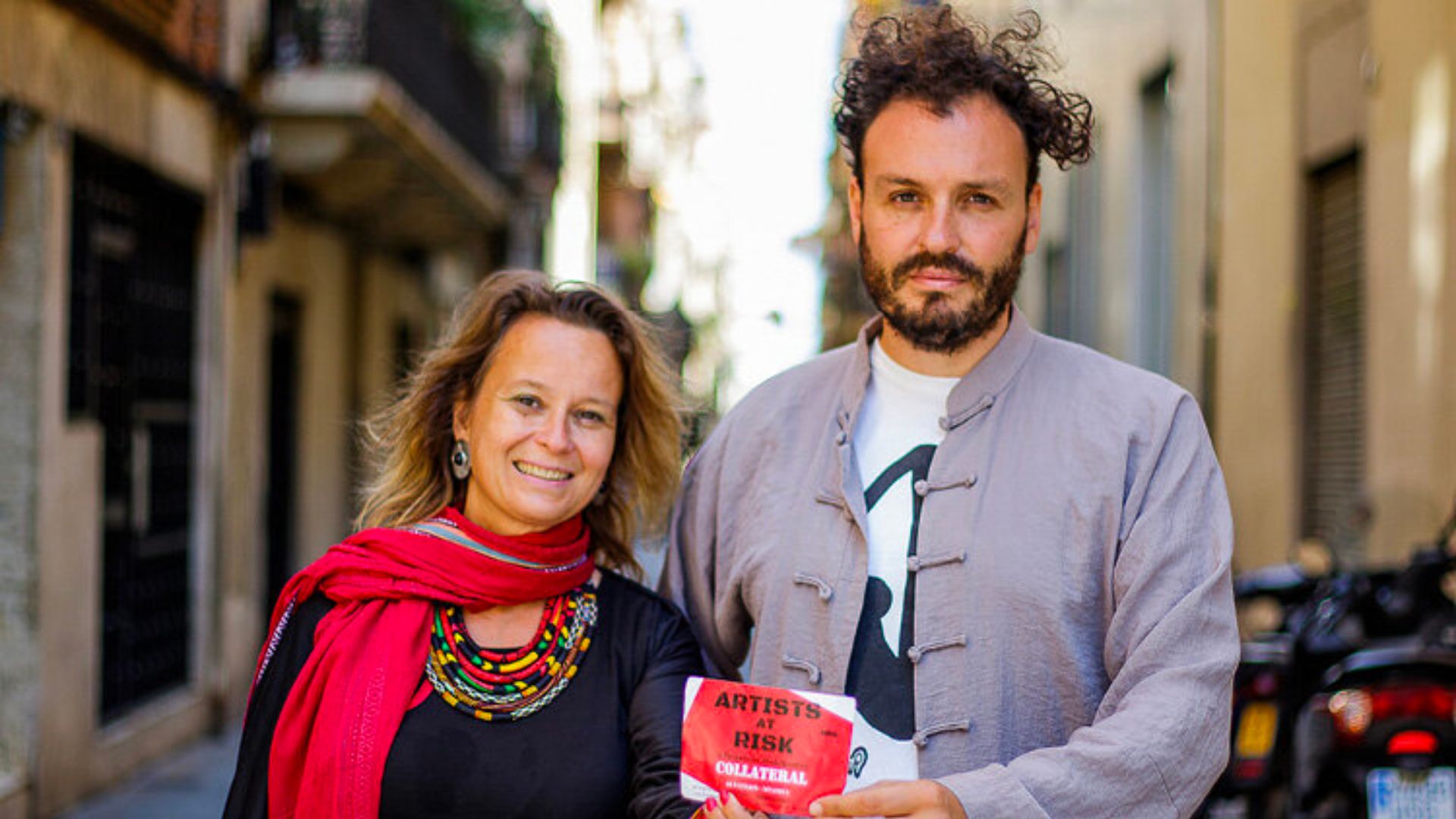
The full-scale Russian invasion of Ukraine prompted an extraordinary mobilisation across Europe's cultural sector. Museums, residency programmes, independent initiatives, and individual cultural workers joined forces to support artists facing displacement and political persecution. Yet as emergency funding diminishes and political priorities shift, a pressing question remains: how can temporary responses develop into sustainable structures of cooperation? Artists at Risk (AR), an international network supporting artists facing persecution and threats to their freedom, has been addressing this question for more than a decade. Through residencies, institutional partnerships, and an expanding network of hosting organisations, AR has developed models connecting local resources with transnational needs. Ahead of the Networks of Cooperation conference in Graz on 15–16 October 2026, we spoke with Marita Muukkonen and Ivor Stodolsky about sustaining cultural networks, the limitations of emergency funding, and moving beyond paternalistic models of assistance. The conversation explores mondial solidarity, cooperation that transcends national boundaries and the role Ukrainian cultural actors can play as equal partners in shaping the future of European cultural life.
You have been working internationally for many years, developing artistic and curatorial networks across different regions and contexts. How do you understand the role of networks in the cultural field today?
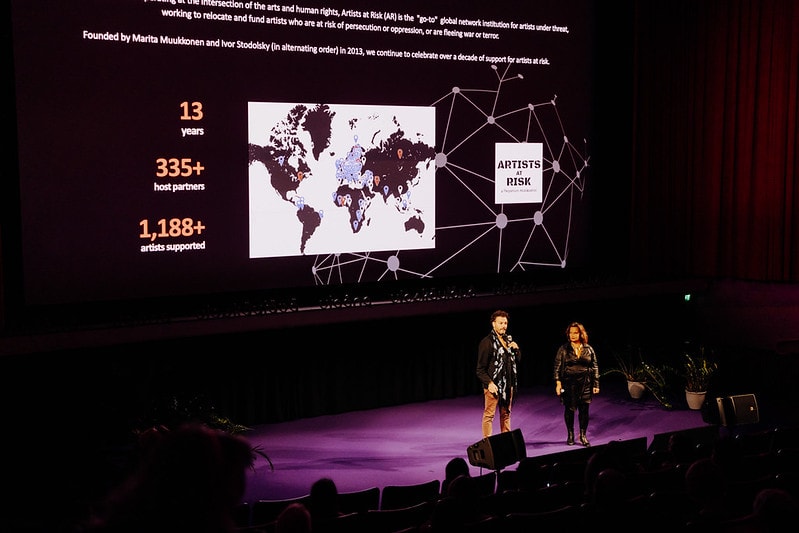
The Artists at Risk (AR) Network is a growing infrastructure for cooperation on residency, curatorial and discursive practices, forming both temporary coalitions and a longer-term community. It grew slowly in the first few years, from Helsinki to Berlin, Barcelona and Paris, and then faster to over thirteen hubs, including in Africa. With the Taliban takeover of Afghanistan, and then with even more intensity following the Russian full-scale invasion of Ukraine in 2021, the network grew exponentially.
AR worked with over 300 hosting partners and developed regional and national-level structures in several European countries, including Finland, Germany, Sweden and Italy, as well as inside Ukraine itself. New hosting partners and networks continue to join across Europe, Africa, the Americas and Asia.
The network connects different kinds of expertise and resources. While cooperation is horizontal, artists can apply through one centralised application form a godsend for applicants at high risk. AR's regional teams carry out risk assessments and background checks, then match eligible and prioritised artists with appropriate hosts and funding, considering their artistic discipline, linguistic and cultural focus, visa situation and personal circumstances.
Networks are bodies that can collectively achieve things their members could not do as effectively on their own. A network is not an end in itself, even if meeting, conversing and writing about its themes are important. It creates a horizontal structure in which artists and cultural organisations can work together as peers.
Over the last years, many new initiatives supporting Ukrainian cultural actors have emerged across Europe. In moments of crisis, networks often develop very quickly. How can these emergency structures evolve into long-term and mutually beneficial forms of cooperation? What makes a support structure sustainable?
AR itself began as a response to individual artists' and collective emergencies. Our work with artists at risk grew out of the situation following the Tahrir Square movement in Egypt. From our base in Helsinki, we invited artists at risk for residencies focused on rest and respite, allowing them to regain strength, develop their artistic paths and plan their next steps.
This developed into a long-term residency and curatorial practice with politically engaged artists, first on the island of Suomenlinna and later at Venetsia, at the seaside estate of Lapinlahti in Helsinki. Working internationally requires both local and international networks, and our partnerships grew organically.
The Taliban takeover of Afghanistan in 2021 changed things considerably. Initiatives from the USA, UK, France, Germany and Iran — from major human rights organisations to filmmakers — came together to support artists fleeing the Taliban. Our Finland-based organisation created a “list of lists” of artists under threat, laying the groundwork for a new digital infrastructure.
We held a key conference at ZKM in Karlsruhe, Institutions and Resistance – Alliances for Art at Risk. The late Peter Weibel declared, to paraphrase, that if every art institution took in one artist in danger, we would have solved the problem. This was exactly what we were trying to do.
The conference posed a seemingly exaggerated question: “Where would you go if the world fell apart? What if your school and museum were hijacked? Militias and mafias ruled? Your friends and colleagues were hunted or killed?” Two weeks later, exactly this happened, this time in Europe: Russia began its full-scale invasion of Ukraine.
Surprisingly, the first applications we received were not from artists, but from art institutions wanting to help. Our digital infrastructure was ready to grow. Hundreds of hosts applied within a few months, and thousands of applications followed. Major initiatives joined us, including partners from Finland, Sweden, Germany (the AR–Goethe Institute's Matchmaking Portal), Italy, Spain and UNESCO.
But sustaining these structures is difficult. Governments provided large-scale funding for Ukraine temporarily, allowing us to expand the AR Secretariat and Matchmaking Teams. When major funding stopped after two years, we had to downsize considerably, losing staff with valuable institutional knowledge.
Emergency cooperation becomes sustainable when it develops into long-term institutional networks with established systems for coordination, matching, hosting and expertise. Yet funding and mobility remain major obstacles, even where solidarity is strong. Regional risk assessment is also essential, particularly as fake and fraudulent applications are a growing phenomenon.
Nevertheless, we were able to return to what we call mondial solidarity, extending our work to artists from countries with no local funding and significant visa restrictions. Our practices and procedures had become more professionalised, allowing us to undertake more complex operations globally, including regional relocations in Africa, Asia and Latin America.
Another development is the growing number of AR Cities — residencies co-funded by municipalities that can guarantee greater continuity and security beyond programme-based funding.
Our Ukrainian operations have also continued despite heavy cuts, sustained by the commitment of network members. The Ukraine-internal network, supported mainly by Finnish, Nordic and EU grants, now has over 15 member residences and has developed collective residencies for frontline and veteran artists.
How can support structures avoid reproducing existing inequalities and power imbalances within the cultural field?
The AR Network ideally operates as a horizontal, peer-to-peer effort, with each partner contributing its own resources, rather than as an outside organisation arriving to rescue people.
We avoid speaking about “saving” artists and reject the self-congratulatory saviour complex. Artists are approached as artists — human beings like ourselves who happen to be in difficult circumstances, circumstances we could one day face ourselves.
People working with AR are not simply recipients of assistance. Once an artist reaches safety, they are offered an artistic context in which they can continue developing their work. The matching process considers their discipline, personal profile, family situation and other needs, allowing the host institution to develop an appropriate programme with them, should they wish. Artists are not obliged to produce work.
At the same time, international cooperation inevitably involves differences in resources, influence and interests. AR has developed protocols to address difficult situations and establish ethically considered criteria for prioritising support. Alongside anti-discrimination and anti-harassment policies, these include a Protocol for Invitations to Platforms in the context of Lethal Conflicts.
Many Ukrainian cultural actors have been working transnationally since 2022, often under difficult conditions. What can European cultural institutions learn from these experiences?
Since 2022, we have witnessed an extraordinary wave of solidarity across Europe, from small artist-run initiatives and collectives to major museums and residency organisations. What made this possible was the willingness of very different institutions to contribute what they could and to coordinate their resources.
European institutions can learn from Ukrainian and other cultural actors that cooperation must be flexible, practical and built on trust. Often, those who have faced the harshest adversity are particularly committed to helping others overcome their own obstacles. Some of AR's matchmakers were previously AR residents themselves, bringing invaluable knowledge of the cultural fields in their countries of origin.
But solidarity alone is not enough. Clearly defined responsibilities, procedures and practices are essential. AR could respond quickly in 2022 because its network had been developing since 2013. The Ukrainian emergency demonstrated both the importance of preparing before a crisis and how quickly cooperation can expand when institutions share resources and responsibility.
Ukrainian cultural actors should not be viewed simply as recipients of support. They are artists and cultural professionals who continue creating, maintaining connections and contributing knowledge under extremely difficult circumstances. Newcomers often enrich their host societies with talent, ideas and productivity, while those who return can contribute to rebuilding their countries and strengthening democracy.
This exchange is also central to the new Creative Europe-funded Artists at Risk (AR) / Ecologists at Risk (ER) – A European Network for Creative Resilience (ENCR). Through Resilience Residencies, peer residencies, workshops and the AR Prize, the network aims to strengthen artistic freedom and preparedness.
Ukrainian cultural professionals have valuable experience to share. Through peer residencies with AR-Ukraine Internal Residency Hosts and capacity-building workshops, Ukrainian and European colleagues can exchange knowledge and develop best practices together.
The cooperation that emerged in 2022 must continue beyond the immediate emergency. Durable, horizontal networks are essential for European resilience and security in the face of future crises, including potential destabilisation through external threats, terrorist attacks or internal unrest.
Independent cultural initiatives often operate with limited resources. Which cooperation models have you found particularly effective in supporting independent actors?
One particularly effective model is the horizontal network, where organisations contribute according to their existing capacities. In the AR Network, hosts range from small artist-run initiatives and collectives to major museums and residency organisations. A smaller organisation may host one or two people, while a larger institution can offer longer residencies or additional professional resources.
We call this the Helsinki model, simply because we developed it there first. It brings together over 25 partners, from the National Theatre and Public Radio Theatre to artist-run galleries, contributing their time and spaces to host residents.
The strength of this approach lies in connecting existing local capacities rather than expecting every organisation to develop its own support infrastructure. Centralised coordination and regional expertise allow smaller initiatives to participate in international cooperation while retaining their local knowledge and autonomy.
National and regional networks also make cooperation more sustainable. Following the large-scale response to the war in Ukraine, AR helped develop networks in Sweden, Germany, Italy and Spain, as well as the AR Ukraine-Internal Residency Network. These allow organisations to share knowledge and resources rather than working in isolation.
The experience of 2022 demonstrated the importance of activating networks quickly, but also the difficulty of maintaining them once emergency attention and funding diminish. Effective cooperation requires more than goodwill: it needs continuity, resources and structures that remain useful beyond a particular crisis.
The conference focuses on sustainable structures “in Europe and beyond.” How do you imagine future transnational cultural cooperation, especially in a politically fragmented world?
The concept of mondial solidarity emphasises connections that extend beyond national boundaries and identities. Unlike international solidarity, which remains tied to the idea of separate nations, mondial suggests a broader form of cooperation that transcends these divisions.
This means creating spaces where people are not primarily defined by nationality or other identity markers, but by their principles, artistic practices, courage and commitment to human rights.
Artists from very different backgrounds can find common ground through shared experiences of taking risks for their art or causes. Such connections can create diverse transnational networks based on common values.
These networks are also important for practical reasons. Artists facing serious threats may need to relocate more than once because of visa restrictions, funding, cultural or career circumstances. The first safe destination is not necessarily the final one.
A functioning network can facilitate a second or third relocation when necessary and desirable. The Schengen Area need not be the final destination, and AR/ER has long worked on regional relocations for both visa and cultural reasons.
Future cooperation should create spaces where people can connect across national and identity divisions while remaining grounded in artistic practice, human rights and shared principles.
Looking back at your own practice, are there examples of collaborations that have significantly changed your understanding of cooperation?
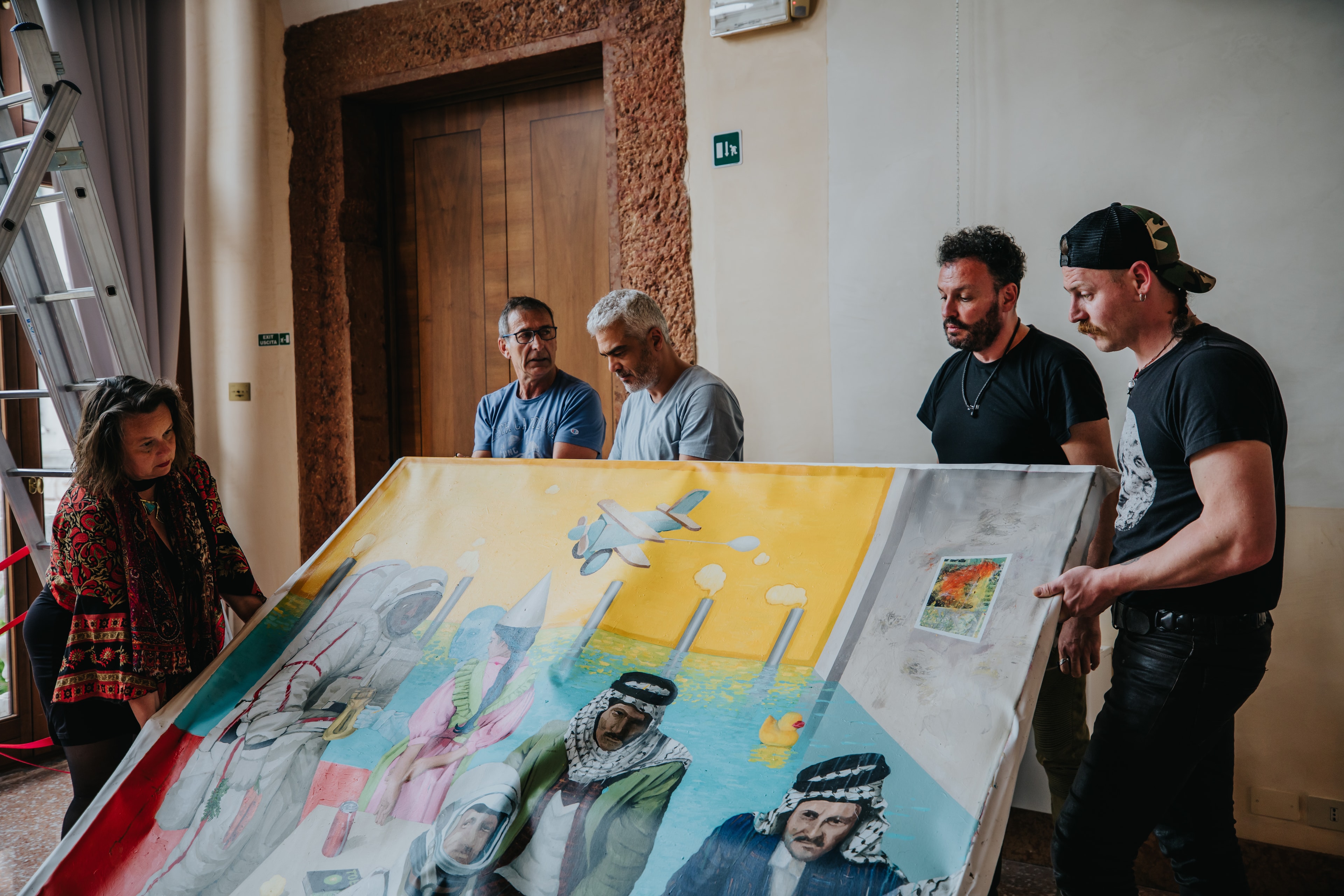
One example is the Perpetual Romani Pavilion, which began as an emergency pavilion at the Venice Biennale after the official Roma Pavilion was cancelled. It subsequently developed into a long-term project with iterations in Malmö and Berlin.
Another is the rapid expansion of AR following Russia's invasion of Ukraine. A gradually developing network suddenly grew through the participation of many European hosting institutions, leading to new national networks and a growing number of AR Cities.
Cooperation often becomes reciprocal. Former AR residents sometimes support other artists at risk, offering guidance, connections and practical assistance based on their own experiences. Some also help expand the network by introducing new residency partners.
Perhaps the strongest individual example is a Ugandan poet whom AR helped escape after he had been attacked and left for dead. Following his recovery and residency, he joined the AR team and helped establish new residencies in Africa.
His story illustrates how cooperation can move beyond a relationship between an organisation and someone receiving assistance. A person initially supported by the network can become part of its structure and help shape its future.
Finally, what would you like participants of the conference to take away from the discussions in Graz?
We would like participants to leave Graz with the conviction that solidarity needs to become democratic infrastructure.
Over the past decade, AR has seen how quickly cultural institutions and individuals can mobilise in response to a crisis. The challenge is to transform this spontaneous willingness to help into durable structures that function before, during and after an emergency.
For Ukrainian cultural actors, this means moving beyond short-term assistance towards sustainable networks, ideally also within Ukraine, that allow artists to remain connected to their practices, communities and professional fields, whether they stay in the country, are temporarily displaced or eventually return.
There is no single model of effective support. Needs depend on context, artistic discipline, family circumstances, location and individual risks. They also change during war and emergencies.
For example, AR-Vidnova Residencies, organised with partners including MC6 in the Carpathian Mountains, support war veterans and artists serving in the military. They offer opportunities to maintain artistic identity and practice alongside psychosomatic therapy.
AR is also piloting a programme with ArtPole near the Moldovan border for women artists with children from Kherson, allowing them some respite from shelling and the constant reality of living in bomb shelters.
We hope the discussions in Graz will encourage new forms of cooperation, particularly better coordination between existing initiatives and practical mechanisms for matching needs with resources already available across Europe.
Above all, Ukrainian cultural actors should not be approached primarily as recipients of assistance. They are peers — artists, curators, researchers and cultural workers who bring knowledge, creativity and agency to the networks they join.
Sustainable cooperation must therefore be reciprocal. It should create structures in which Ukrainian cultural actors can contribute, lead, connect and actively shape the future of European cultural life.
/
Roser Gamonal / Camilla Hanhirova / ReCompose