

Office Vienna
/
Solidarity must move in both directions
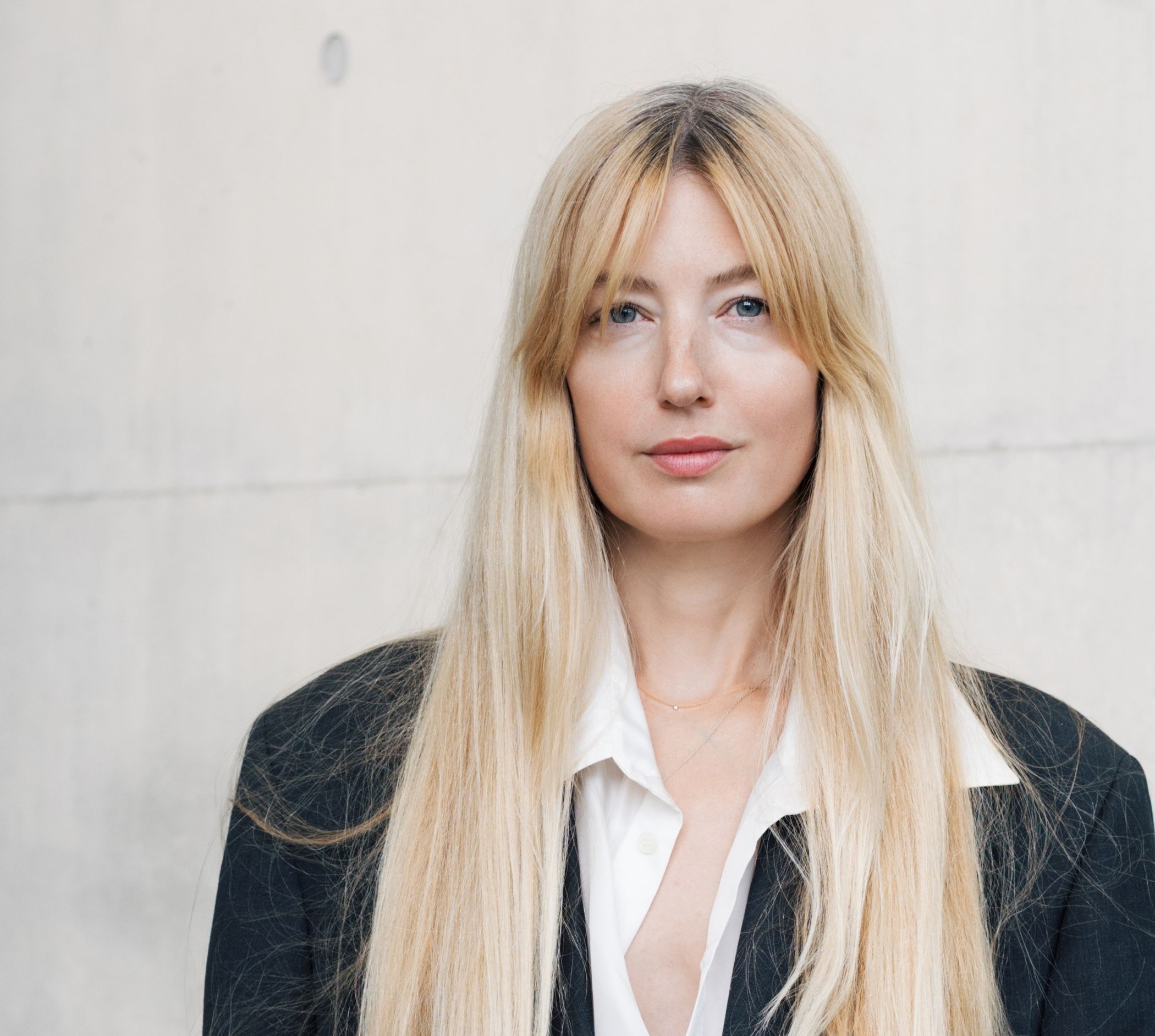
Since Russia’s full-scale invasion of Ukraine, cultural institutions and practitioners have built new cross-border networks, emergency initiatives, and forms of solidarity. Today, one of the central questions is how these relationships can move beyond crisis response and become sustainable structures for the future.
For curator, art historian, and cultural advisor Maria Isserlis, this also means rethinking how cultural cooperation is organised: who defines priorities, how unequal access to resources can be addressed, and what role the Ukrainian diaspora can play as a mediator between Ukraine and international institutions. In this conversation, Isserlis reflects on culture as an essential part of reconstruction, the need for long-term professional partnerships, and the potential of stronger networks across Central and Eastern Europe.
Maria Isserlis is a curator, art historian, and cultural advisor based in Berlin. She is currently Advisor to the President for International Cultural Relations at the Prussian Cultural Heritage Foundation. Until 2026, she served as Head and Curator of International Relations at the Dresden State Art Collections. Her curatorial work includes Kaleidoscope of (Hi)stories. Art from Ukraine, Change to Come, Pairs Skating: Boris Mikhailov and Wolfgang Tillmans, and Barbara Kruger’s Untitled (Another Again) on an Intercity train operated by Ukrainian Railways. She is also Deputy Chair of Kulturstiftung Ukraine and co-founder of A:D.
/
Office Ukraine: In the upcoming conference "Networks of Cooperation" in Graz you will be participating in a working group on institutional cooperation, diaspora, and reconstruction. From your perspective, what are the most urgent questions concerning these themes today?
Maria Isserlis: All three topics are incredibly important and interconnected, but I think we still need to look at them separately. When it comes to institutional cooperation, there is still a lack of sustainable professional networks. Meaningful cooperation requires consistency, regular communication, and long-term commitment. Yet the Ukrainian cultural and institutional field operates in a mode of constant disruption. The urgent question is therefore how to build structures that can sustain institutional relationships beyond individual projects, funding cycles, and moments of political attention. This is also where I see the role of the Ukrainian diaspora. It has grown enormously since the beginning of the full-scale invasion. One of its most important roles is to mediate between the Ukrainian cultural field and the international cultural sphere. People and institutions in Ukraine often do not have the capacity or emotional resources to sustain these connections. The question is how the diaspora can assume this role without creating parallel structures or speaking on behalf of those working in Ukraine. Reconstruction is perhaps the most difficult topic to discuss while the war is still ongoing. For many people in Ukraine, such conversations can understandably feel premature or even cynical. Nevertheless, we have to discuss reconstruction now. Once the chaos of war ends, we cannot allow it to be replaced by the chaos of reconstruction.
Reconstruction cannot mean simply rebuilding what existed before. We need to ask what kind of institutions and cultural landscape Ukraine wants to build and how Ukrainian cultural professionals and communities can remain central to this process.
/
OU: Since 2022, Ukrainian cultural actors have established new forms of collaboration across borders. How do you see the role of the Ukrainian diaspora in shaping cultural exchange and solidarity networks?
MI: I see the role of the Ukrainian diaspora as absolutely crucial. It occupies a unique position: proximity to international institutions and cultural actors, combined with a deep understanding of the situation in Ukraine. At the same time, this position is not easy. From my own experience of migration, I think the relationship to your country of origin changes over time. First, there is a strong attachment to everything you have left behind. Then comes a period of disconnection, when you are trying to build a new life and become part of a new society. Only later are you able to find a balance between these two realities. Many Ukrainians who left at the beginning of the full-scale invasion are going through these phases simultaneously. The challenge is to maintain this community without allowing the Ukrainian cultural field to become fragmented. The diaspora needs to build networks internationally while remaining closely connected to institutions and cultural actors in Ukraine. But this responsibility goes both ways: the cultural community in Ukraine must also remain connected to those who have left. There are already important practices demonstrating how this can work: the Scattered Communities programme initiated by Alona Karavai, the Kyiv Biennial operating both inside and outside Ukraine, institutions such as Jam Factory involving Ukrainian cultural professionals living abroad, and publications such as Solomiya Magazine and Temptress. For me, the role of the diaspora is ultimately to mediate between these different realities. This means creating platforms for people who remain in Ukraine and whose voices are often more difficult to hear internationally. Sometimes this requires being quieter yourself and using your access to create space for others. Solidarity must move in both directions.
/
OU: International support for Ukrainian culture has been substantial in recent years. How can institutions ensure that these collaborations remain equitable and avoid paternalistic structures?
MI: First, we need to be clear about what we mean by equitable collaboration. Every structure of support contains a certain power imbalance: there is someone providing resources and someone receiving them. We cannot pretend this asymmetry does not exist. The question is how we work with it. There is often a genuine desire to help. But support should not become a gesture or simply a way of spending available budgets. Ukrainian voices need to be included before decisions are made, so that actual needs can be identified and collaborations developed together with Ukrainian professionals rather than for them. Building equitable relationships requires time, openness, and mutual respect. International institutions need to take Ukrainian expertise seriously, while Ukrainian cultural professionals also need to remain open to professional perspectives coming from outside. Trust cannot be created through declarations; it develops through working together over time. One example is the work of TBA21 and the personal commitment of Francesca Thyssen-Bornemisza. Since the beginning of the full-scale invasion, this support has ranged from safeguarding Ukrainian collections to bringing Ukrainian institutions and cultural actors into international contexts as equal professional partners. Most recently, this included the exhibition of Roman Khimei and Yarema Malashchuk at the Museo Nacional Thyssen-Bornemisza in Madrid during ARCO.
Professionalism is central to this process. Ukrainian cultural actors should be recognised as professional counterparts, not simply as representatives of a country at war or recipients of solidarity. Ultimately, equitable collaboration depends on mutual respect, professional exchange, and the willingness on both sides to build trust over time.
/
OU: Reconstruction is often understood primarily in physical or economic terms. What role can culture and the arts play in rebuilding societies affected by war?
MI: For me, this question is problematic precisely because it separates culture from physical and economic reconstruction. I see culture as an integral part of both. We cannot treat culture as a form of soft power that exists in its own bubble and can support society without the necessary economic and physical resources. If we consider culture an essential part of the societal fabric, we have to provide the conditions that allow it to function. Culture cannot be something additional that comes on top of rebuilding infrastructure and the economy. It must be integrated into reconstruction strategies from the beginning. Culture is already a fundamental need while the war is ongoing, and its importance will only increase afterwards. Societies do not rebuild themselves through infrastructure and economic recovery alone. Culture needs institutions, spaces, professionals, funding, and long-term strategies. We should stop playing culture against economic or physical reconstruction and understand it as an integral part of the same process.
/
OU: In your view, what can European institutions learn from Ukrainian cultural actors and their responses to crisis?
MI: At the beginning of the full-scale invasion, some German museums reviewed their evacuation plans in case of war and realised that they had not been revised since the Second World War. That fact alone shows how the return of war to Europe forced European institutions to reconsider scenarios for which they were simply not prepared. There is a lot to learn from Ukrainian cultural actors: the speed of adaptation, the resilience of grassroots organisations, and the ability to create community-based infrastructures that do not rely entirely on political support. This is becoming increasingly relevant as political developments in many European countries move towards the far right. If cultural institutions are to maintain a degree of independence and remain democratic spaces, they need to think more seriously about their dependence on political structures and funding systems. Another lesson concerns the scarcity of resources, something that is becoming increasingly familiar within the European Union as well. Limited resources can encourage institutions to collaborate, share infrastructure and expertise, and achieve more collectively. We need to move from predominantly competitive models towards more symbiotic forms of cooperation. The strategies developed by Ukrainian grassroots initiatives under extreme pressure should not only be seen as emergency responses, but as models from which more resilient, independent, and collaborative cultural structures can be developed.
/
OU: Looking ahead, what kinds of institutional cooperation would you like to see emerge in the coming years?
MI: What we are witnessing at the moment is still a certain arrogance and blindness from Western institutions towards the former East. The full-scale invasion of Ukraine has begun to change the gaze towards the region, but the process remains slow. At the same time, the region is becoming increasingly aware of its own agency and of the need to build its own networks and structures of solidarity. I am thinking about Ukraine, the Baltic states, former Eastern Germany, Czechia, Poland, Belarus, the Balkans, and Central Asia. Shared and interconnected historical experiences provide rich ground for future projects, research, and institutional cooperation. The point is not to compete with Western institutions or to catch up with models that, in many cases, remain shaped by imperial and colonial structures that have never been properly dismantled. The region needs to strengthen its own networks, build stronger professional profiles, and enter international collaborations as an equal partner rather than as a region that needs to be explained, represented, or patronised. This is also central to my own curatorial practice: developing networks across the region, strengthening the international visibility of its cultural actors, and contributing to institutional partnerships that emerge from within the region itself. I believe these partnerships have the potential to reshape how cultural cooperation is structured in Europe and beyond.
/
Text by Office Ukraine Vienna
/
Photo credits: Daria Biliak