

Office Vienna
/
Prolet.air.studio residency
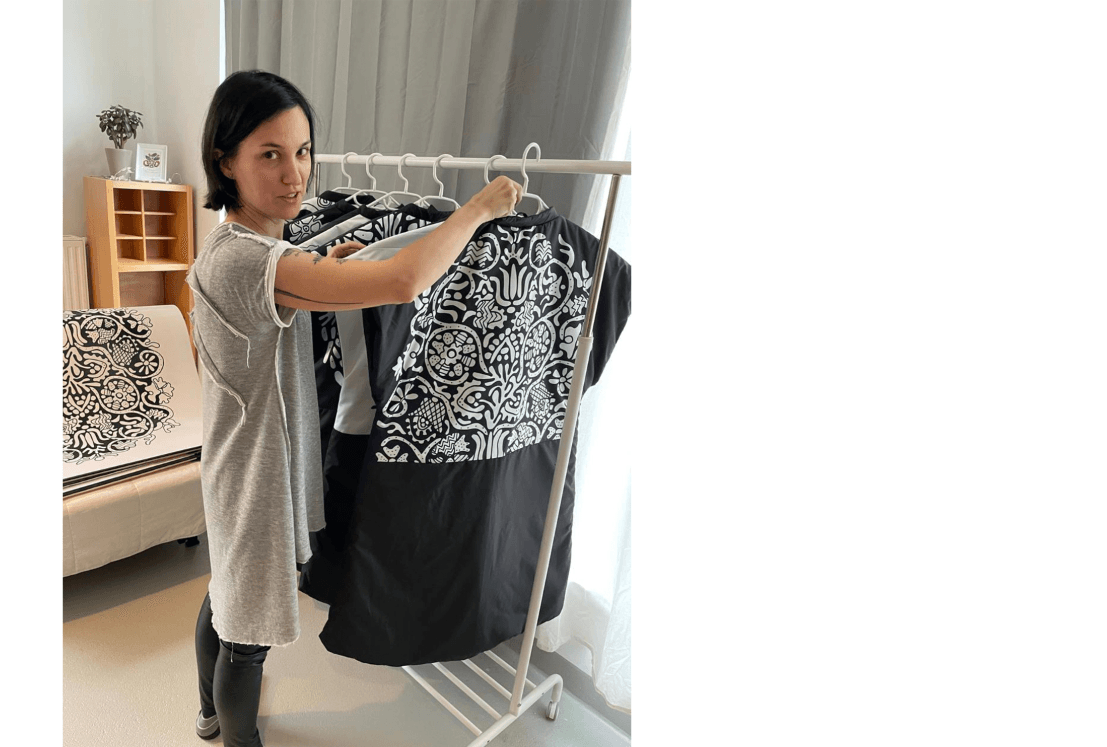
In our February issue, Office Ukraine Vienna focuses on the exhibition “While I float,” which featured four Ukrainian artists, as well as two artist residencies in Vienna that we support.
An interview with the initiator Ania Zorh.
/
Office Ukraine: When and for what purpose was the prolet.air.studio residency founded? What are its main focuses?
Ania Zorh: The prolet.air.studio residency was launched in October 2022 and is located in the alternative construction project Que[e]rbeet, Wildgarten in Vienna. The artist-in-residence program “Mothering the (M)other” supports Ukrainian Flinta artists — single parents in precarious living situations. The first round of the artist residency was supported by the BMKÖS, and the second by the ERSTE Foundation and tranzit.at. Open calls for both rounds were published on social media and promoted with the support of Office Ukraine.
/
OU:Which female artists have participated in the residency program so far?
AZ: Two rounds of the Artist-in-Residence program have been held so far: From October 2022 to January 2023 sisters Karina and Alina Haieva — an artist duo and the founders of GA.EVA.UA BRAND., who work in the fields of graphic and fashion design — lived and worked at the residency. Since January (and through April), the residency has been used by visual artist Lucy Ivanova and writer Oksana Maslova.
/
OU: How does the prolet.air studio residency work? What program is planned for the artists during their stay?
AZ: At the beginning of the residency, the organizers host an artist talk during which the artists have the opportunity to get to know the local art scene. The residency culminates in an exhibition where each artist can present her work. However, the production and presentation of art are not mandatory: This is primarily an emergency residency, where the focus is not on production but on guidance and support.
/
Interview with Alina and Karina Haieva in the prolet.air.studio residency
We talked to Karina and Alina Haieva, the first participants in the prolet.air.studio residency, and asked them about their lives in Vienna and their artistic practice during wartime.
/
Office Ukraine: Why did you come to Vienna? What has your experience been like in Austria?
Alina Haieva: We came to Vienna because the Russian Federation invaded Ukraine. We have three children in total, so their safety was our top priority. In addition, our mother has been living in Austria since 2018, not far from Vienna, so we were able to combine our stay here with the children’s “early vacation” at their grandmother’s house. We visited Vienna for the first time in 2010. In the spring of 2022, my sister and I were invited to the Vienna Academy of Fine Arts to visit Veronika Dirnhofer’s class. The result was a joint exhibition at the Academy, where we presented for the first time another part of the project “… and flowers will sprout up on the ashes,” which Alina had begun in Kyiv in early 2022. We held numerous workshops on woodblock printing in textile printing at the Barbareum and the Ukrainian School in Vienna and shared the origins of Ukrainian culture not only with the younger generation. We also participated in events organized by Office Ukraine and were invited by this initiative to the “razom” billboard exhibition at Praterstern. Now a fashion show as part of the project „… and flowers will sprout up on the ashes,” is in the works.
/
OU: What did you do during the artist residency? What activities did you participate in?
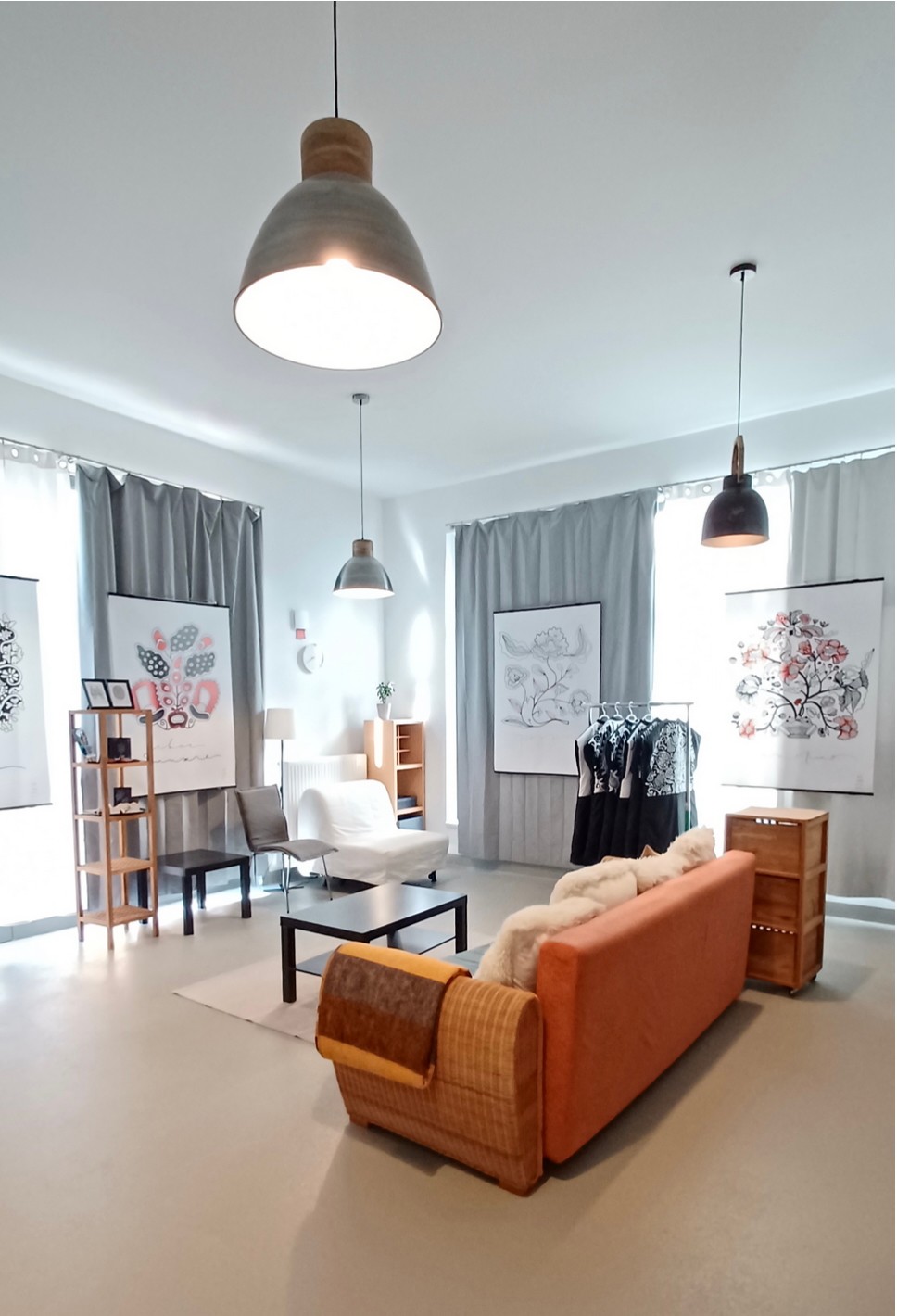
AH: During our three-month stay, we accomplished quite a lot: We continued to create jewelry and accessories using a 3D printer and developed a new clothing line featuring prints — vests with stylized images of the embroidery from the Cossack foremen’s robes, which are on display in the collection of the Chernihiv Historical Museum — and created reproductions of ornaments. Karina designed new garments and complemented them with jewelry featuring ornaments, which are scheduled to be presented at an exhibition in Vienna in February; Alina painted new pictures. In addition, we participated in a Christmas market and a charity market. An exhibition of prints from the project “...and flowers will sprout up on the ashes” took place in Lviv. There were events at the residency every month, and the last one was an exhibition of prints and clothing from the project, which we are continuing to work on.
/
OU: What kinds of exhibitions or art-related activities have inspired you in Vienna?
AH: The quality and quantity of art in Vienna are impressive. We were very inspired by the Ai Weiwei retrospective at the Albertina Modern. The opportunity to visit museums is generally very inspiring; we visited the Leopold Museum alone four times last year.
/
OU: What is your art about, and for whom is it intended? How has it changed before and during the war?
AH: Our art is about self-awareness and self-identity. Everything revolves around a person, who is the central figure in this kind of art. In paonting and graphic art, Alina poses the question and answers it immediately: "What’s more important, you or me? — What’s between us!” After the beginning of the war, our creativity became more conscious, more comprehensive and more complete.
/
OU: While i float
AH: As part of a collaboration between Vitalnya Vienna, Office Ukraine, and Format (*.strk), the exhibition “While I float,” featuring works by six Vienna-based artists, was presented from January 13 to 20 in a temporary exhibition space in Vienna’s Währing district.
The exhibition text reflects the melancholic and unsettling atmosphere of the showroom — an abandoned apartment — and the works on display: “Looking in the mirror, I can’t seem to make out the shape of my own face, but there’s something moving behind me. (...) I turn around and I realize: This space is not actually empty; it is filled with absence.”
Mark Chehodaiev from Kyiv, one of the four artists originally from Ukraine and currently a student at the University of Applied Arts Vienna, used “Disputed Territory,” a three-dimensional modeling program that combines both memory-based and artificial environments. The rendered image shows a scene from a bird’s-eye view — a flood in his former room. The work explores the tension arising from memories of his former life and the present sense of absence and catastrophe.
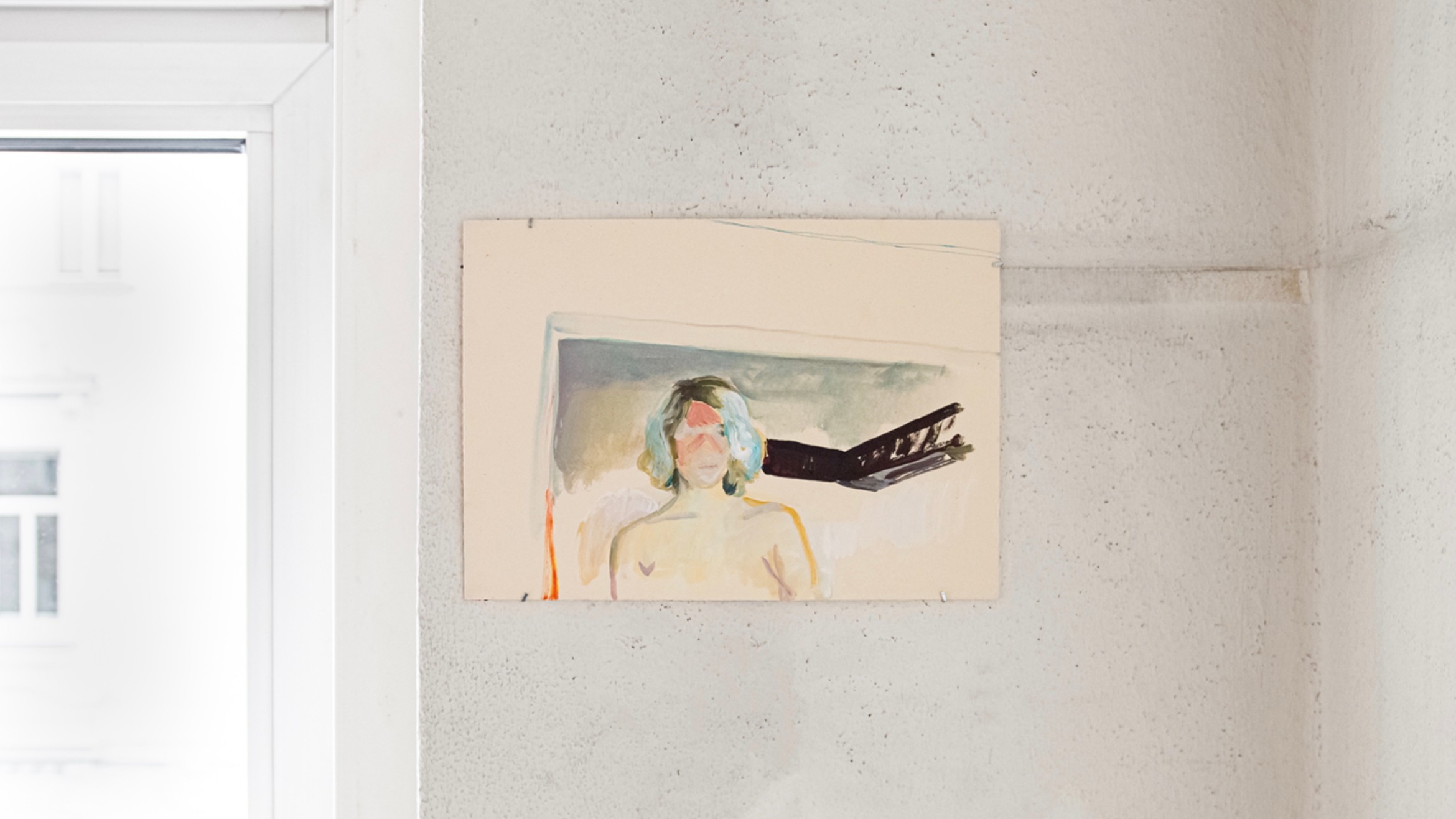
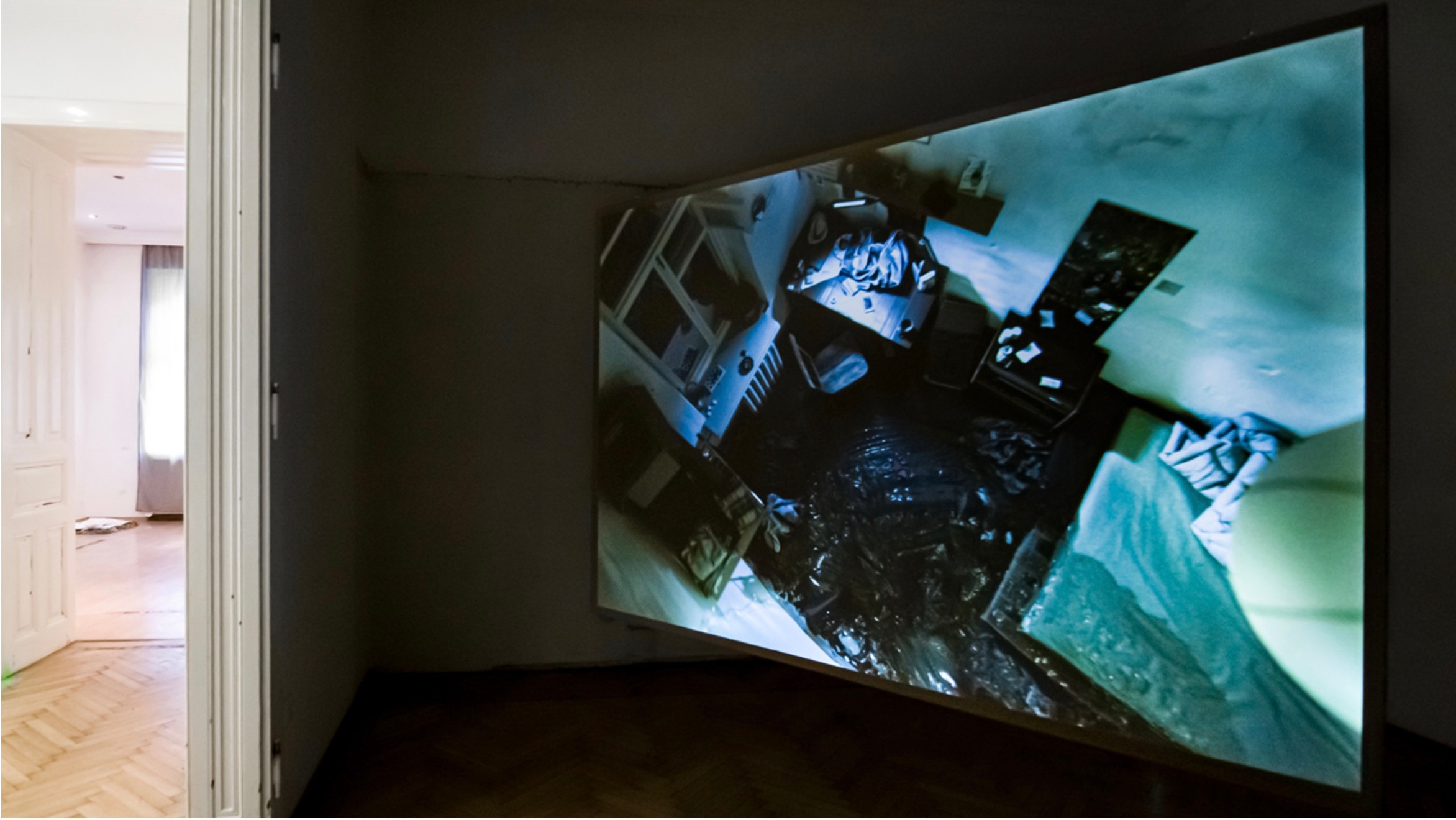
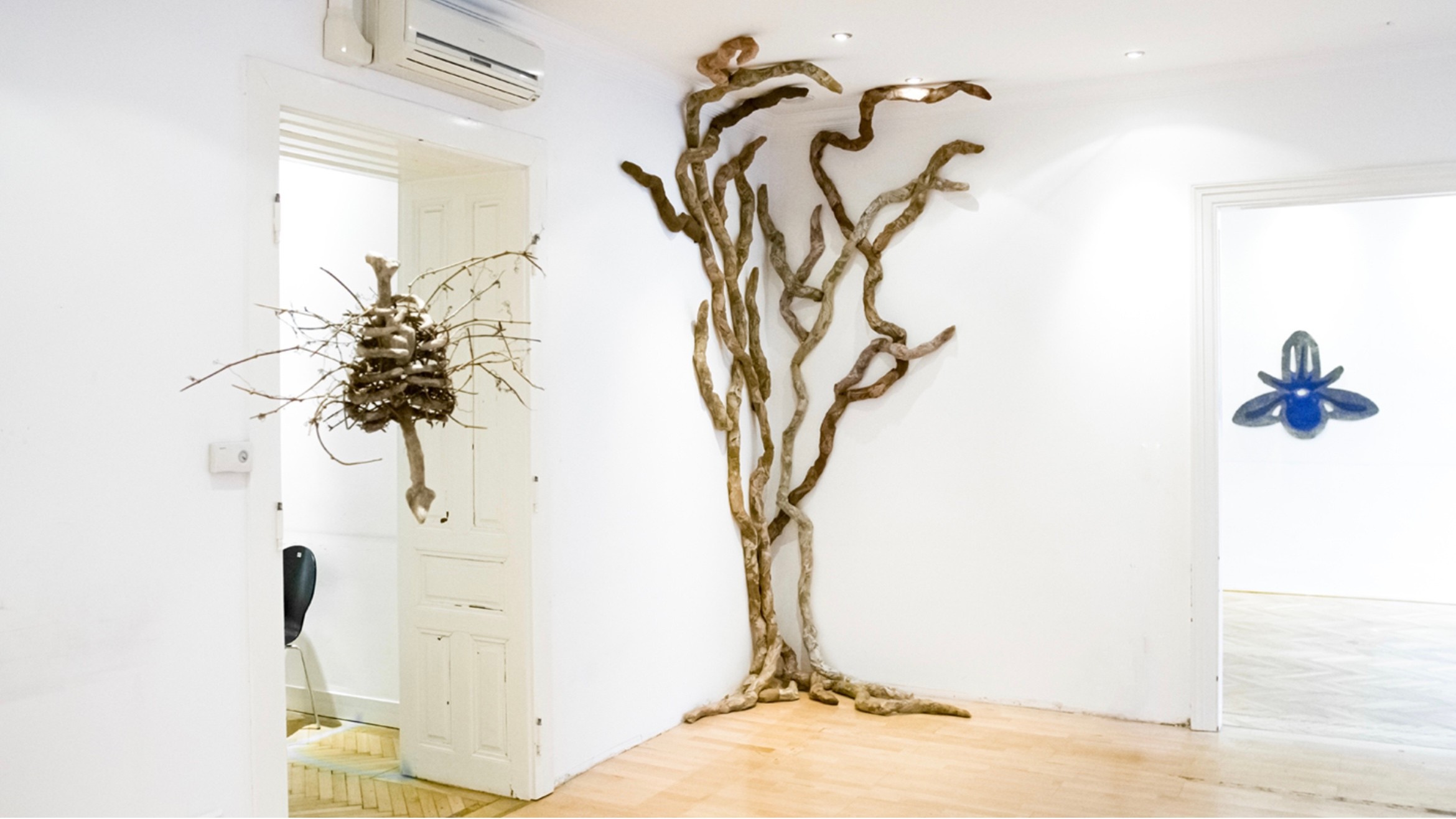
Olha Horiunova, also from Kyiv, created several objects and a wall installation for the exhibition. Her work is both a tribute and a parody of the lost sense of security that the walls of her cozy rental apartment once provided—a copy without the original. Anatoly Belov (Kyiv) presented a series of graphic works titled “Psychedelic Forest” — a story about the artist’s adaptation and survival in this terrible world around him — was presented by Anatoly Belov (Kyiv). Left alone, he encounters an apocalyptic forest with branches resembling mutating human limbs. In muted pastel tones, Lucy Ivanova from Dnipro documents life in her self-portraits and reflects on everyday reality. Italian artist Gloria Pagliani, a student at the Academy of Fine Arts in Vienna, explores the consequences and contradictions arising from her practice, such as impersonality, artificiality, the use of illusions, and the examination of the difference between decoration and ornament. The playful element is a fundamental component of her work.
Ivana Lazic, from Serbia and a student at the University of Applied Arts, exhibited works created in Japan, where she learned traditional techniques of paper and wool production.
She works primarily with sculptures and installations and seeks to catalyze and embody the connections between various aspects of the understanding, meaning, and activation of matter.
/
Curated and co-organized by Sasha Horbatiuk, Natalia Gurova, and Claudia Strate. Supported by BMKOES, Section IV: Art and Culture
/
Photos: Ania Zorh, Kevin Daryl Ferdinandus.