

Office Graz
/
Great talent for self-organization
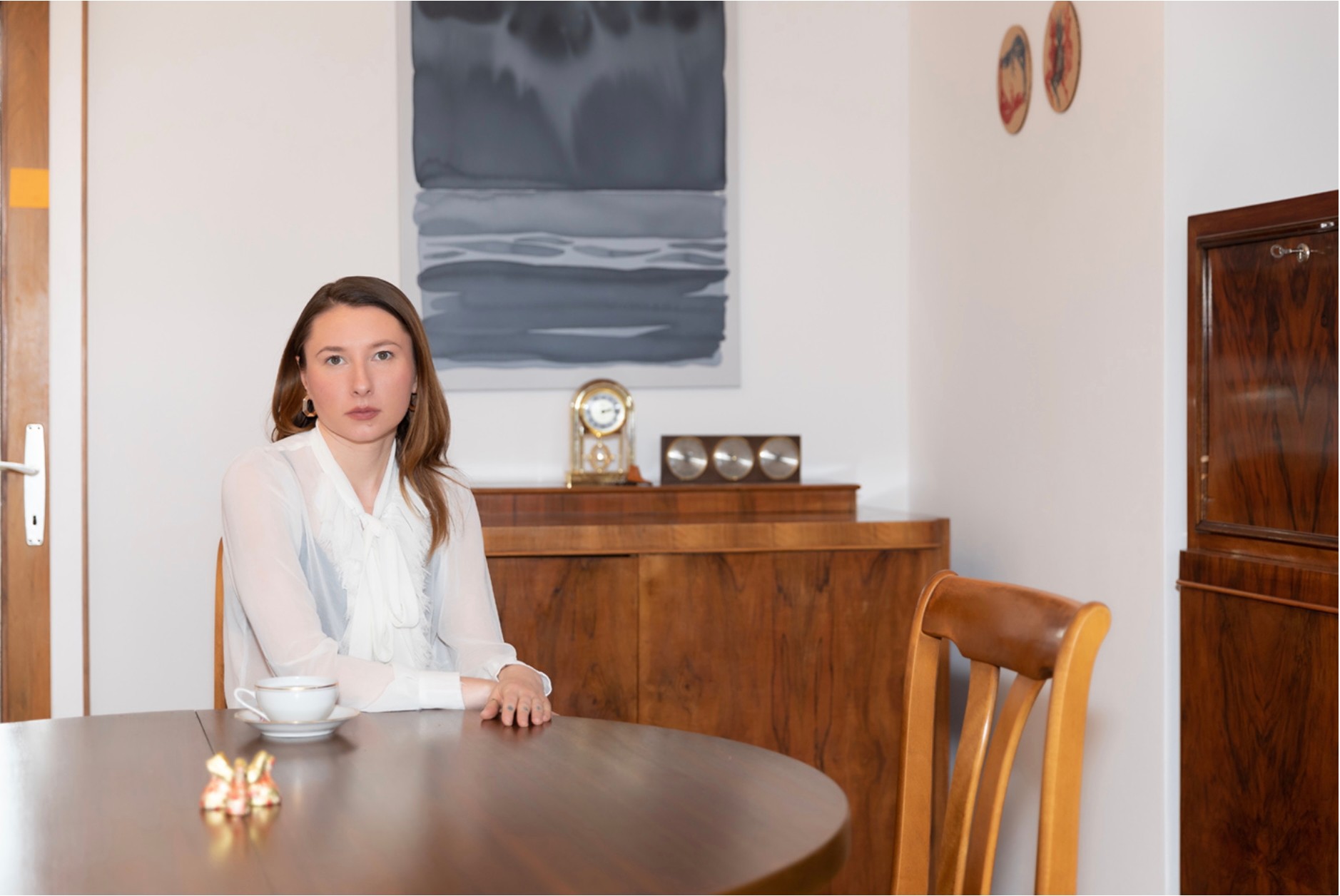
On March 11, 2023, the exhibition “Home Reflections” opened in the apartment of Ukrainian artists Yevheniia Laptii and Svitlana Zhytnia in Graz. The aim of this pop-up exhibition was to strengthen ties with the local community and draw attention to the multi-talented artists from Ukraine. Further exhibitions are planned.
Nastia Khlestova, curator and employee of the Office Ukraine Graz, spoke with Yevheniia Laptii, one of the two initiators of the exhibition:
/
Office Ukraine: Why and how did the idea of an exhibition in your own apartment come about?
Yavheniia Laptii: As a trained art historian, I used to organize exhibitions, but then I started taking photos myself and withdrew from the curatorial field. Recently, however, I have become interested in expanding my artistic activities again. I have always enjoyed working with other artists, both as a manager and as an artist. And since we have a large room in our apartment, ideal for small exhibitions, the idea quickly came up: “Let's do an exhibition!
/
OU: Does your initiative follow the tradition of apartment exhibitions in Ukraine? Did you take inspiration from this?
YL: Apartment exhibitions are widespread in Ukraine, and my experience with them was both an inspiration and confirmation that an exhibition does not necessarily require a large budget or professionally equipped spaces.
/
OU: Tell us about the exhibition itself—what was the organizational process like, and which artists participated?
YL: Since the exhibition was intended to showcase works by the Ukrainian community in Graz, there was no selection process for artists and their works. I simply created a group on Telegram and added all the artists I communicate with. Then I asked you, Nastia, to add all the other artists in Graz whom I don't know so well to the chat. Through exchanges with the artists, I learned what they were working on and what they wanted to show in the exhibition. As a result, we had eleven participants: Oksana Solop, Valeriia Lysenko, Elmira Schemsedinova, Polina Makarova, Diana Fedoriaka, Eva Fomitskih, Mariia Rohovets, Yurii Golik, Olia Fedorova, and the two of us: Svitlana Zhytnia and Yevheniia Laptii. There was no theme for the exhibition; I deliberately chose not to have one because we had no money for curatorial work or for the production of artworks. Nevertheless, the works of most of the artists share a common theme: an appeal to the intimate, the physical, a search for one's own roots. Many artists refer to the landscape as a reminder of home. A dream of the landscape, a thought about a lost peaceful sky, a lost home. Other artists brought works in which they deal with body image. Diaries were also presented in which the artists reflected on their own war experiences, mirroring the everyday life of many Ukrainians.
/
OU: Who was the audience for the exhibition? What feedback did you receive from the Ukrainian community? What about from Austrian audiences?
YL: First and foremost, the audience for the exhibition consisted of our friends and their acquaintances; about 50 people in total. Although the Ukrainian community only began to form in Graz a year ago, it has grown considerably during this time and now consists of Ukrainians and Austrians. Many of the participants invited their Austrian acquaintances, curators, other artists, and the general public, all of whom were interested in seeing contemporary Ukrainian art and talking to the artists in a casual setting. In my opinion, our audience is also interested in viewing art outside of galleries. It is a more intimate atmosphere that promotes a deeper and friendlier perception of art.
/
OU: What are the plans for the future? Will there be more apartment exhibitions?
YL: We are currently planning two more exhibitions, but this time with a selection of artists who have their own themes and concepts. We are also planning lectures by Ukrainian artists and art critics. These lectures will be held in English and Ukrainian in order to appeal to a wider audience.
/
OU: Why do you think self-organization in art is important: for Ukrainians and for everyone in culture in general?
YL: In my opinion, this is a philosophical question. The events of recent years in Ukraine show that Ukrainian society has a great talent for self-organization. We can see this in the example of volunteer movements that collect money and equipment for the army, and in public organizations that help refugees and war victims. Or in the Maidan Revolution, which then became a major social and political force. Self-organization is an integral part of Ukrainian society. So if there is an opportunity to do something socially useful yourself, why not? Another reason, in my opinion, is that Ukrainians are already used to the state not helping in cultural or other areas, so most projects are carried out independently. I hope that after the war ends, the Ukrainian state and Ukrainian society will be on a new, higher level, and that art will become popular among all segments of the population as a result.
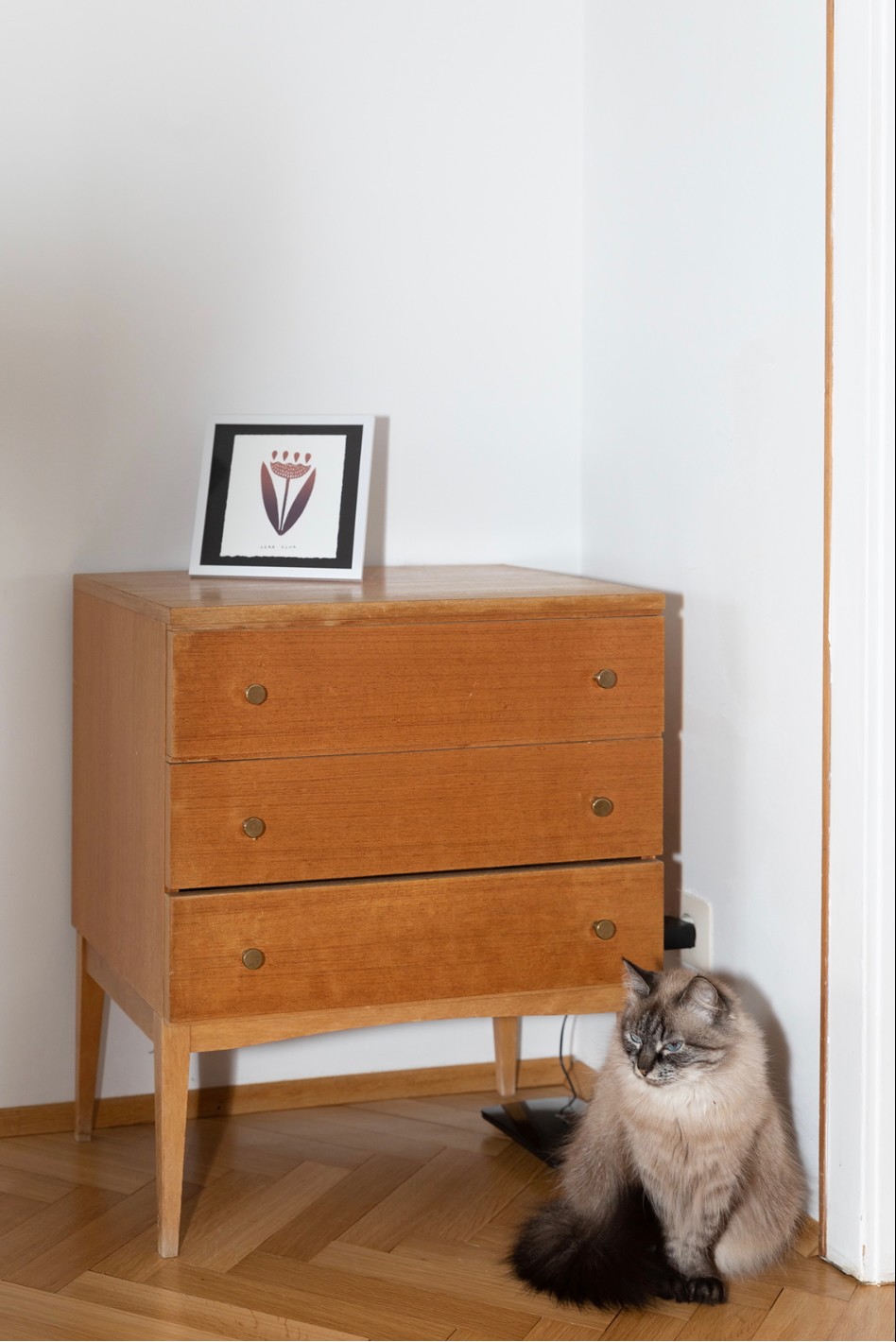
/ Yevheniia Laptii is a Ukrainian photo artist who was born in Kharkiv, Ukraine. She graduated from the Kharkiv State Academy of Design and Arts (majoring in art history) and currently lives in Graz, Austria./
/
Photos: Thomas Raggam