
Office Graz
/
From a “Solidarity Quota” to Sustainable Cultural Partnership
In the first months after Russia’s full-scale invasion, cultural cooperation between Ukraine and Europe became almost a matter of survival. Ukrainian art collections had to be evacuated from areas under shelling. Artists needed safe places to work, while cultural organizations were struggling simply to stay afloat. European institutions opened residencies, launched emergency programmes, offered exhibition spaces, and provided financial support. Decisions that would normally take months were made within days.
More than four years have passed. The war continues, but the context of Ukrainian-European cultural cooperation is changing. The question is no longer only how to support Ukrainian culture, but how to make it an organic part of the European cultural landscape, regardless of the level of political attention the war receives.
This shift from emergency response to sustainability is now being discussed by representatives of Ukraine’s independent art scene, cultural diplomacy institutions, and European organisations that have made supporting Ukrainian culture part of their work since 2022.
/
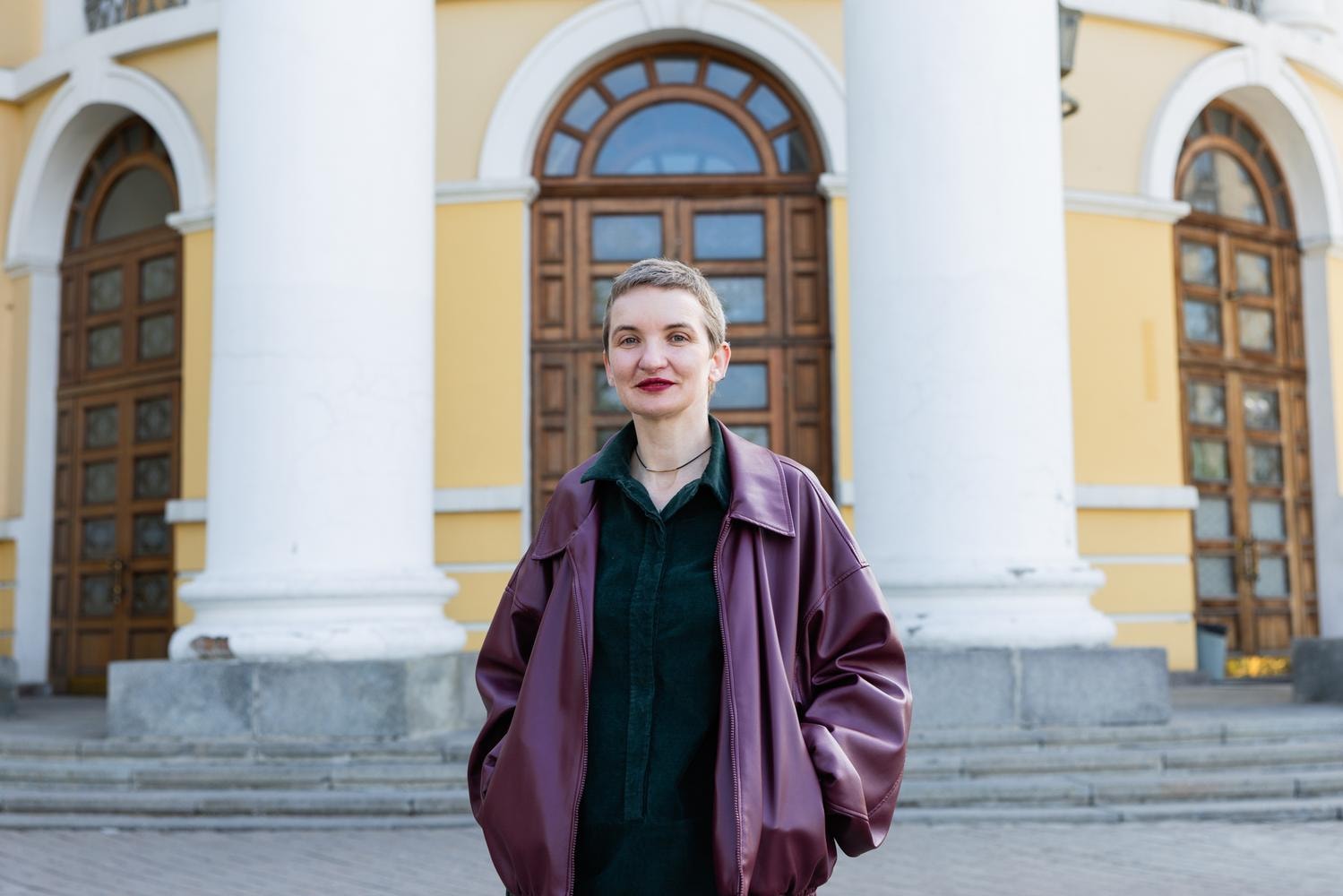
Alona Karavai: Partnership Starts with More Than a Grant
Alona Karavai is one of the prominent figures in Ukraine’s independent art scene. A cultural manager, curator, and essayist, she has worked with Ukrainian culture in a wide range of contexts for nearly two decades, from the country’s east to its west.
She was part of the team at IZOLYATSIA, a contemporary art centre in Donetsk that Russian forces turned into a torture site and prison after occupying the city. Karavai later created several cultural initiatives, including an artist residency, a cultural production agency, a contemporary art space, and a media and archive project focused on Ukrainian art.
After the full-scale invasion began, her team organised emergency residencies for artists and helped evacuate art collections, primarily private collections, artists’ archives, family holdings and cultural heritage that was often stored literally in apartments and studios.
During the first months of the full-scale war, the work was largely intuitive: there was a need, and the team stepped in.
European partners responded immediately.
“We received a huge wave of messages from our partners, as well as from people abroad we didn’t even know, asking: Do you need help? How can we help?” Alona Karavai recalls.
European partners sent packing materials and donations, and helped arrange temporary storage for collections abroad. At times, there were more offers of help than the Ukrainian team could physically handle. The main constraints were not money but the number of available vehicles and drivers, as well as the availability of safe routes.
This work has not ended. Due to the ongoing security situation, requests continue to arrive periodically from Kyiv, Kharkiv, and other cities. Some archives that have already been evacuated once now have to be moved again.
And this points to a larger problem. After years of war, Ukraine still lacks a comprehensive system for the safe storage of its cultural heritage. There are neither enough underground storage facilities nor a clear mechanism for the long-term relocation of parts of collections abroad.
/
“Bucha Changed the Way We Looked at Our Work”
In 2022, European support for Ukrainian culture was largely a response to the shock of war. But some of the relationships forged at that time have proved far more enduring.
“Most of the people we started working with in 2022 are still our partners today,” Karavai says.
She cites Office Ukraine, the European Cultural Foundation, and the Museum of Modern Art in Warsaw as examples. New connections have joined long-standing ties with Germany, Austria, and the Baltic states, as well as with Poland, France, and Italy. In Karavai’s view, some of the partnerships that emerged because of the war could last for decades.
But a growing number of contacts does not necessarily amount to structural change.
Karavai has seen European researchers and cultural professionals who, before the full-scale invasion, had spent decades working primarily with Russia. After 2022 and particularly following the atrocities in Bucha, some of them shifted their professional focus. They began studying Ukrainian, traveling to Ukraine and building relationships with local artists.
“We need specialists abroad – in Rome, Berlin, Vienna – who are local researchers with professional knowledge of the Ukrainian scene and who can work with it without relying on a Russian lens,” Karavai stresses.
At the same time, the Ukrainian cultural manager does not romanticize the transformation of recent years. Several Ukrainian organisations eventually withdrew from an international network that had organised emergency artist residencies because they felt the network failed to understand what was happening in Ukraine.
“Two years after the full-scale invasion, they were still asking our participants how Ukrainian culture differed from Russian culture. And we thought: this is no longer our job to educate them. At some point, people have to do their own homework.”
For Karavai’s team, there is also a clear red line. It does not take part in projects that publicly place Ukrainian and Russian artists side by side, nor does it work with organisations that are, in practice, still Russian, even if they registered in Europe after 2022.
Yet another change is unmistakable. Before 2022, Ukrainian artists often had to knock on the doors of European institutions for years and were frequently met with silence. Today, that situation is gradually changing, and Ukrainian artists are encountering a greater openness to dialogue.
/
Finding the Right Match
In the first years of the war, the sheer speed of events left little room for thoughtful matchmaking. An early-career artist might find themselves in a project run by an institution accustomed to working only with established names. In contrast, an artist reinterpreting folklore could end up in a space focused on radical conceptual practices.
After an experience like that, a European institution might conclude that cooperation with Ukrainian artists “doesn’t work,” when in fact it was simply a mismatch between particular people and institutions.
That is why one of Karavai’s recommendations is straightforward: don’t rush. Start by getting to know each other and trying a small pilot project. Only then scale up.
“It’s about building relationships: starting with something smaller so you don’t end up falling out over a bigger project; learning from mistakes and gradually moving toward something more ambitious. These things work, but of course they are very difficult to implement when our planning horizon is so uncertain,” Karavai adds.
/
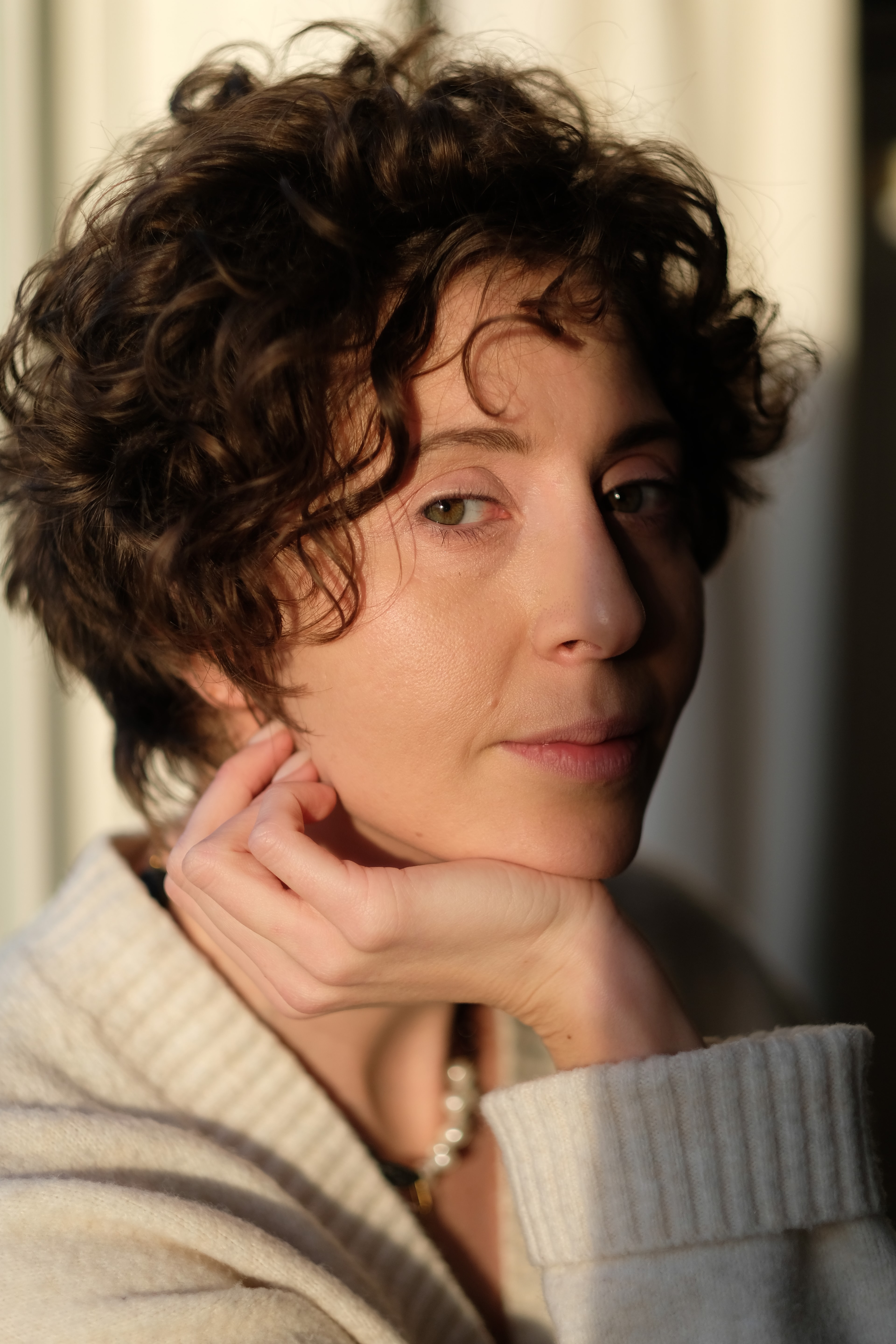
Anastasiya Volkova: Ukrainian Art as Part of an International Programme
While Alona Karavai approaches international cooperation from the perspective of an independent art institution, Anastasiya Volkova, Head of the Arts Programmes at the Ukrainian Institute, views it through the lens of cultural diplomacy and the country’s international representation.
This reveals another paradox of recent years.
The full-scale war has made Ukraine and Ukrainian culture more visible than ever before. For millions of people around the world, Russia’s invasion was their first meaningful encounter with Ukrainian language, history, art and identity.
Volkova describes this phenomenon through the concept of “traumatic geography” – a situation in which a country’s suffering brings it greater visibility and recognition.
This attention has opened platforms and opportunities that were previously almost inaccessible to Ukrainian culture. But it has also created a risk: interest in Ukrainian art has sometimes stemmed not from an understanding of the work itself, but from solidarity with a country that has become the victim of aggression.
That is why the role of cultural diplomacy is changing.
It is no longer simply about presenting Ukraine abroad. It is about building horizontal connections between institutions and creating sustainable platforms for Ukrainian artists.
“For us, the strongest examples are situations where festivals, curators, or artistic directors select something from the Ukrainian offering because it genuinely fits their programme. At that point, a Ukrainian project stops being merely a ‘Ukrainian presence’ and becomes an organic part of an international programme,” Volkova emphasizes.
There are many such examples today: the Lviv-based metal band 1914, which has built a substantial international following in the heavy music scene, or the contemporary opera Opera Aperta, which has received several prestigious music awards. In this sense, success is measured not by the number of Ukrainian cultural events held abroad, but by how naturally they become part of the local cultural context.
Another important measure is what happens to these connections once major programmes end.
For example, the French cultural season Le Voyage en Ukraine – Saison de l’Ukraine en France brought 70 Ukrainian projects to venues across the country. After the season ended, a French cultural delegation travelled to Kyiv to continue developing the relationship.
“For me, that is the key indicator of a shift from solidarity to professional partnership. The best outcome is when these connections continue to exist after a particular project has ended – sometimes even without the Ukrainian Institute’s involvement,” Volkova says.
But this is also where one of the major structural problems emerges.
European cultural organisations often plan their work three to five years ahead. For Ukrainian institutions operating under wartime conditions, even planning six months ahead can be difficult.
That is why the conversation today needs to go beyond funding individual projects or productions. It must also include institutional and stabilisation support.
After years of relentless Russian attacks, exhaustion among individuals and teams is becoming an increasingly serious problem. Long-term support would enable cultural organisations not only to produce their next exhibition, performance, or residency, but also to retain their teams and plan their development years ahead.
Like Karavai, Volkova cautions against partnerships formed simply because a grant consortium needs a Ukrainian organisation.
“The best strategy is not to choose a partner based on ‘let’s join because they need a Ukrainian organisation to form a grant consortium,’ but based on shared interests and mutual fit. It is also important to look beyond a basic agreement in condemning Russia’s armed aggression against Ukraine. Partners need to understand that culture is not a politically neutral space, and that this requires attention to the substance of artistic messages and to the experiences of the people involved.”
Volkova identifies study visits by international cultural professionals to Ukraine as one of the most effective ways of finding partners. They allow visitors to encounter not some abstract notion of “Ukrainian culture,” but specific institutions, communities, people – and to find those with whom a genuine professional match can emerge.
/
Nastia Khlestova: When the Project Ends but the Partnership Doesn’t
This autumn, Office Ukraine, which has supported Ukrainian artists since the beginning of the full-scale war, plans to bring together Ukrainian and European cultural organisations, funders, and government representatives for a conference in Graz. The discussion will focus on the future of Ukrainian-European cultural cooperation.
The idea dates to 2023, when Office Ukraine was still operating primarily as an emergency support initiative. But over the years, it has built up a network of relationships, knowledge, and experience – a solid enough foundation to move from emergency assistance toward long-term cooperation.
“We would like cultural exchange between Ukraine and Europe to be sustainable, so that these partnerships are not created solely for the sake of individual projects but allow us to support one another over the long term,” says Khlestova from Office Ukraine.
Today, most cultural funding mechanisms are built around a specific outcome that can be described and measured. There is an exhibition, so there is a grant. There is a festival, so there is a budget. But once the final report is submitted, the cooperation often ends.
This is precisely why there is such a shortage of sustainable programmes designed to support ongoing interaction rather than finance a single cultural product. Developing such mechanisms may become one of the key questions for the next stage of Ukrainian-European cooperation.
In the first years of the full-scale war, Ukrainian artists were often invited simply because they were Ukrainian. Today, European institutions are much more likely to turn to Ukrainian art because of its artistic quality and substance. This is an important step forward, unfolding alongside another process: Russia’s war is becoming less visible in the international media landscape.
The European cultural community therefore faces a delicate balancing act: moving beyond a Ukrainian “solidarity quota” without allowing solidarity itself to disappear.
This is why Office Ukraine is seeking to bring together, in one space, people who shape cultural cooperation at different levels. Partners in the conference include Austria’s Federal Ministry of Housing, Arts, Culture, Media and Sport, Creative Europe Desk Austria, and Kunsthaus Graz.
One conference is unlikely to produce a ready-made formula for long-term Ukrainian-European cultural partnership. But the fact that this question is being asked at all signals that the relationship has entered a new phase.
In 2022, the question was: How can we save, support and help Ukrainian culture keep going? Today, it is becoming something different: How can we ensure that this cooperation no longer requires an emergency to justify its existence?
/
Text by Olha Volynska