

Office Innsbruck
/
Art That Makes War Visible
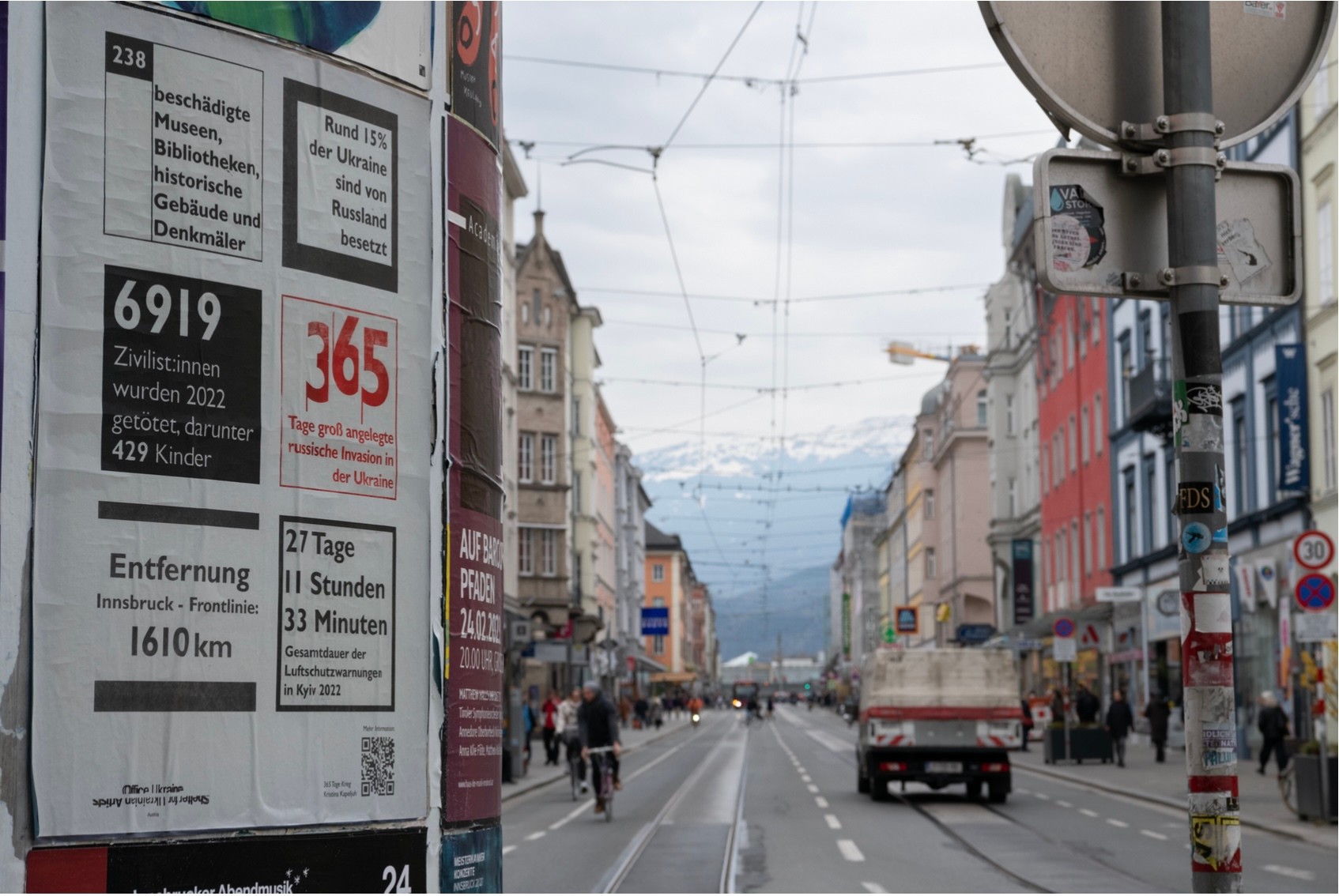
February 24 in Innsbruck and the Surrounding Area. Marking one year of the war, Office Ukraine Innsbruck brought together posters, a public mural, radio programming, and film screenings to make the realities of daily life in Ukraine visible in Innsbruck. These projects show how art and culture can keep the war in public view, honour personal experiences, and sustain support for Ukrainian artists and communities.
Never forget and never accept war as the new normal: under this motto, the Innsbruck office of Office Ukraine initiated and co-organized a series of projects and events to mark February 24. Even one year after the start of the large-scale invasion, air raid warnings and shelling, fear and displacement remain part of everyday life for Ukrainians
To make the reality of daily life under war visible even in Innsbruck, which is supposedly located at a safe distance, Ukrainian artist and graphic designer Kristina Kapeljuh, in collaboration with Office Ukraine, designed the poster series “365 Days of War.”
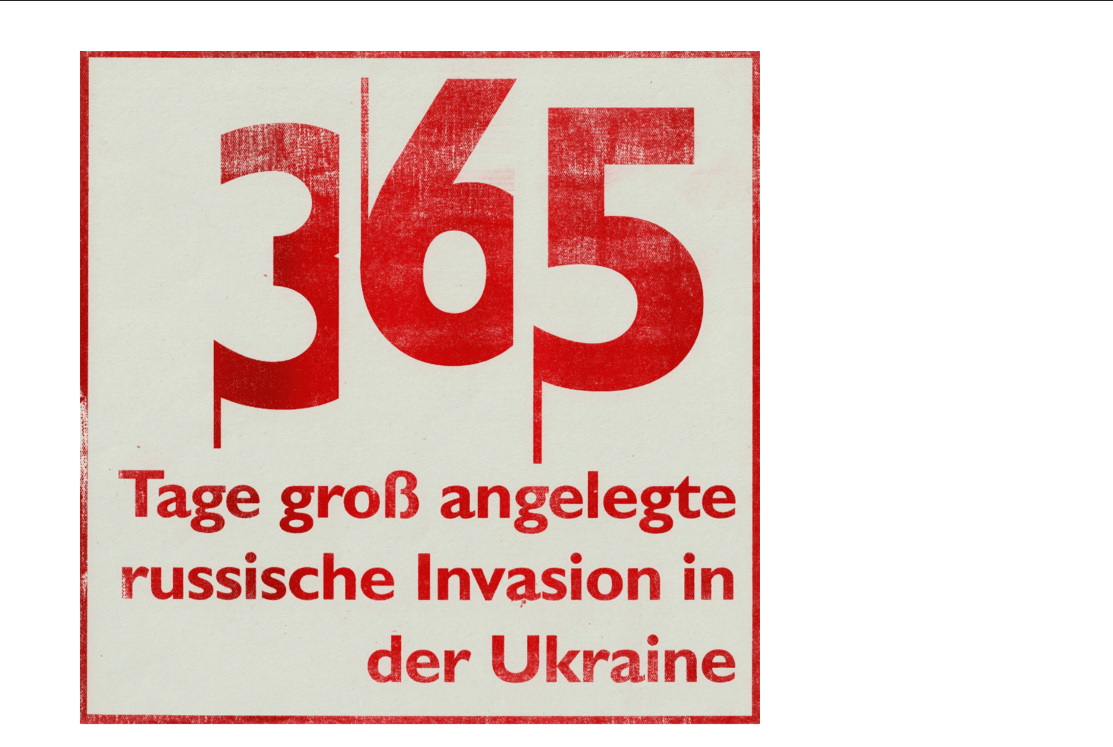
Kapeljuh, currently an artist-in-residence at the Building School of Architecture and Art, visually interpreted statistical data on the war and its effects, printed them using the Risograph process, and compiled them into four different posters. The posters were on display in the streets of Innsbruck for two weeks starting February 20, 2023. The facts and figures compiled from various sources provide a picture of the humanitarian, socio-economic, and political impacts and background of the Russian-Ukrainian war. How many people have fled? How far away is the war from us? How often is daily life in Ukraine interrupted by air raid warnings? The figures help bring home the scale and reality of the war. For behind every number lies a personal stories, losses, shattered hopes for the future, and lives lost. Sources and further background information can be found on the project’s website.
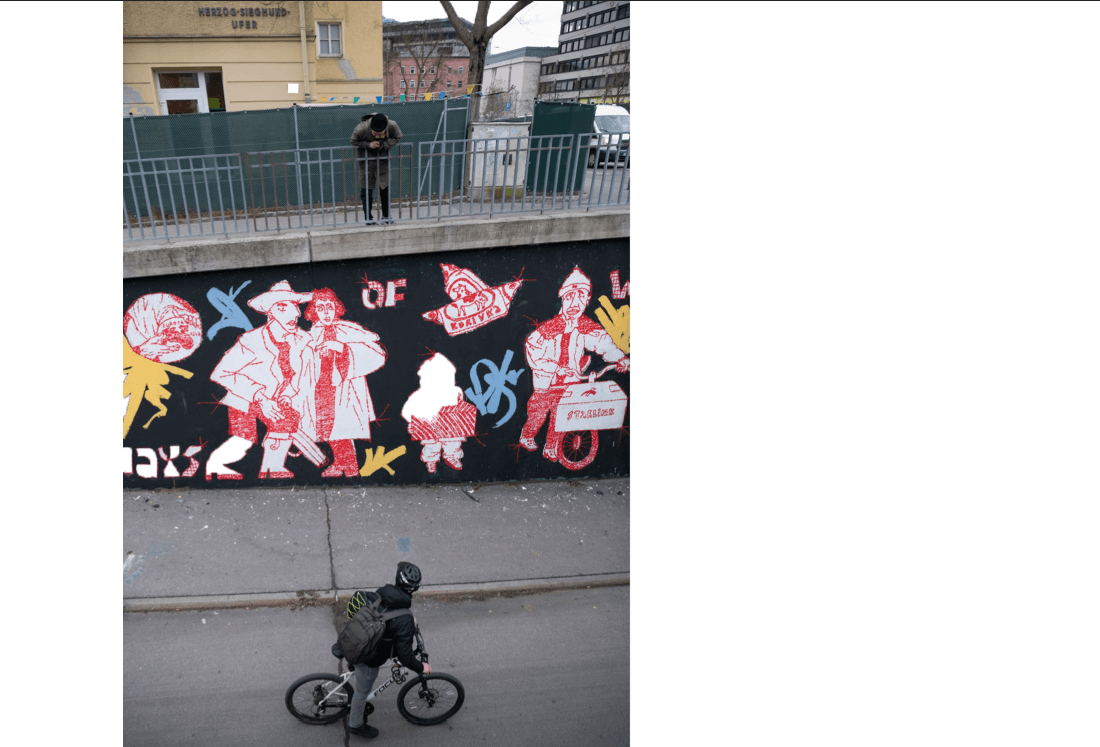
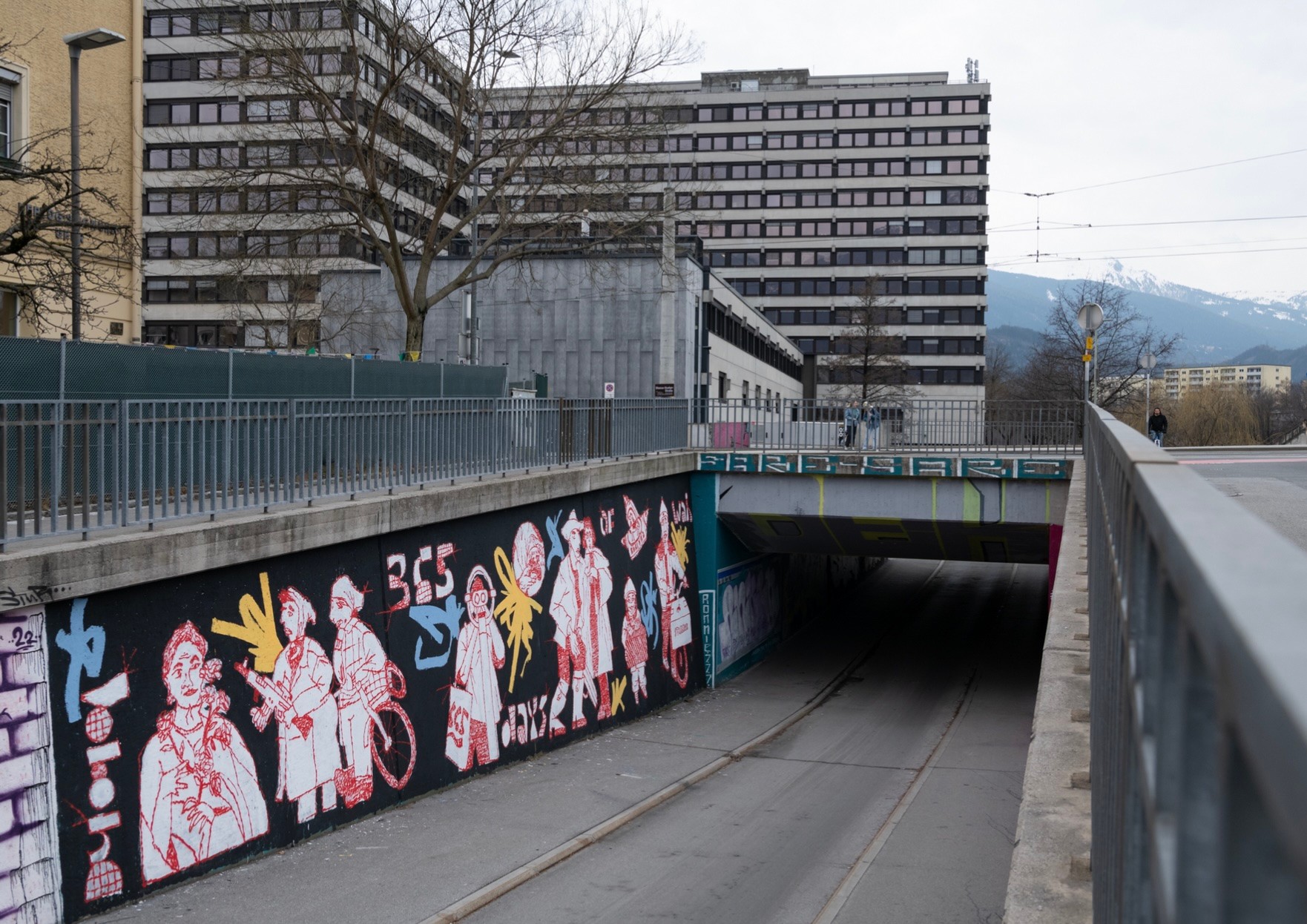
The mural “Untitled, No Plan,” completed shortly before the anniversary by artist Miki-Mike 665, who grew up in Zaporizhzhia, also speaks to the difficulty of finding words to describe what has been experienced and of depicting it visually. On the wall of the underpass beneath the University Bridge South, he creates an intense narrative that unfolds against a black background: an allusion to the uncertainty and impossibility of depicting the future at this moment. The figurative motifs show us the reality that people in Ukraine have faced since the war began: a man pushing a bicycle with a box bearing the Starlink logo, a woman from rural Ukraine ready to defend herself, a child from the war-ravaged city of Izium rejoicing over a box of candy. But Miki-Mike 665 also references the local historical and contemporary context: alongside the Ukrainian protagonists, viewers discover a father and son, a monument dedicated to the Tyrolean freedom struggles of 1809, and a tourist looking through a telescope.
The war in Ukraine seems to have made the geographical distance to Austria feel shorter. Yet despite extensive coverage in local media, especially during the first months of the war, some questions remain unanswered. What was daily life like for people in Ukraine during these 365 days, and how do they manage to carry on? How can one survive the complete destruction of one’s former life without losing one’s mind? Is it possible to get used to missiles flying over your head on a regular basis (which, given the current situation of recurring blackouts, is actually easier)? Ira Kurhanska, a Ukrainian refugee currently living in Innsbruck and an employee of Office Ukraine, guided listeners through the reality of life for people in and from Ukraine during the radio program “Russia’s War Against Me.”
The program, available for listening in the Austrian Cultural Broadcasting Archive, lets us delve into what was happening beneath the surface of local news coverage on this topic throughout the year; music and DJ tracks about the war, diaries and poems, stand-up comedy clips and TikTok shorts, memes and facts.
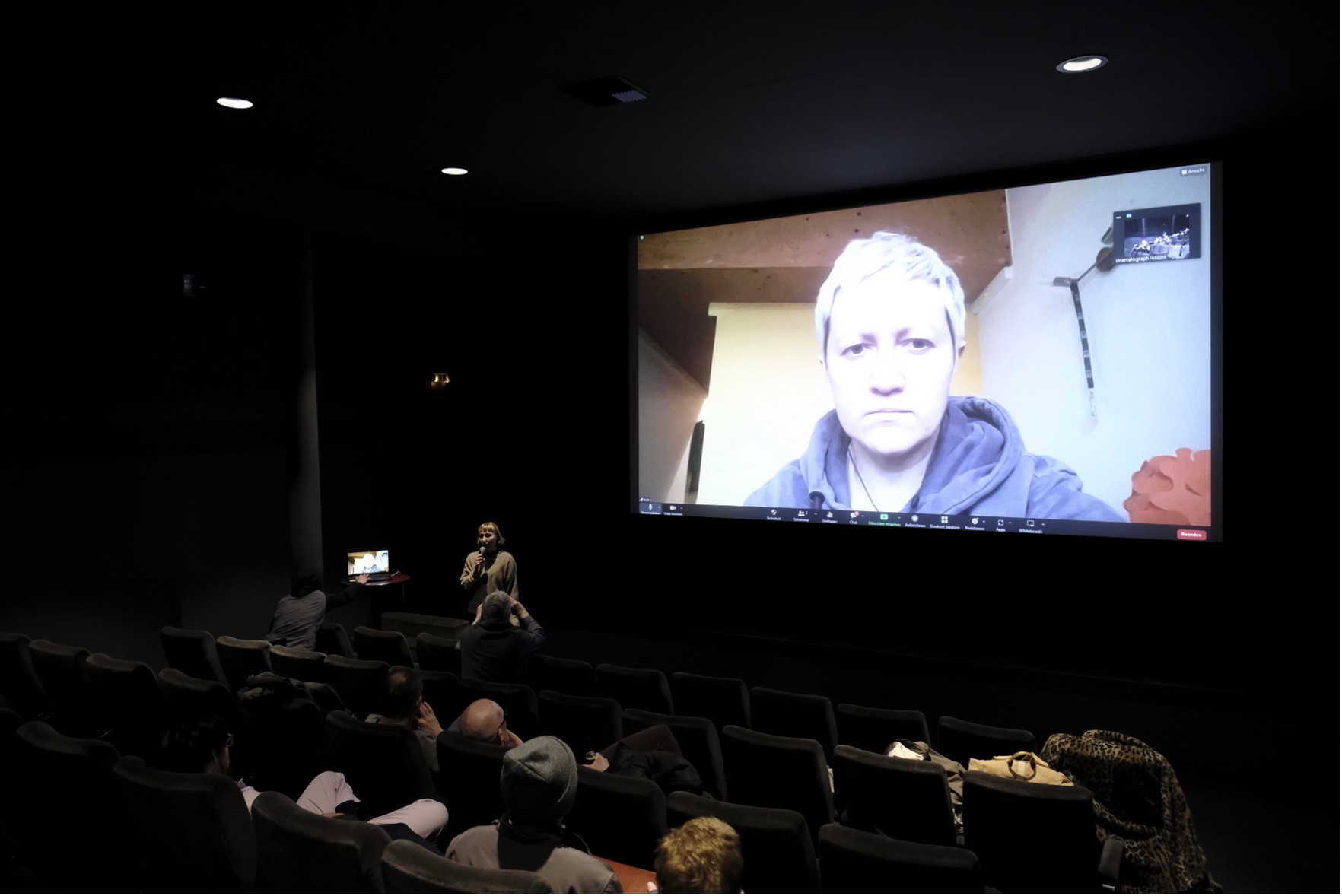
Movie screens were also filled with images from Ukraine during the week of February 24. In cooperation with Leokino Innsbruck, a video work by Ukrainian filmmaker Zoya Laktionova was shown and shown multiple times. On February 24, the short film “Remember the Smell of Mariupol” was screened as a supporting film before every movie showing at Leokino and Cinematograph. On the evening before the premiere of “Signs of War,” the filmmaker spoke via Zoom about the film’s creation and background. We are also pleased that Kunstraum Schwaz responded to our call and, in collaboration with Office Ukraine, organized a screening on February 23. The 2017 film “The Distant Barking of Dogs” depicts the life of an elderly woman and her grandchildren in a village on the front lines in the Donbass. Simon Lereng Wilmont accompanied the protagonists over the course of a year and illustrates what it means to grow up in a war zone.
It was important for us to emphasize on this day that we will continue to serve as a point of contact for Ukrainian cultural actors in Western Austria in the coming months; and that there remains a need for support and collaboration from Austrian cultural institutions and actors. We hope that the events of the war will remain in the public eye beyond February 24 and that, together with our partners, we can contribute to strengthening and raising the profile of the Ukrainian cultural scene.
/
Photos: Daniel Jarosch, Andrei Siclodi.